Fear Grips South Africa as Anti-Migrant Deadline Sparks Mass Departures
President Ramaphosa urges calm as thousands of migrants prepare to leave amid rising protests and fears of xenophobic violence.
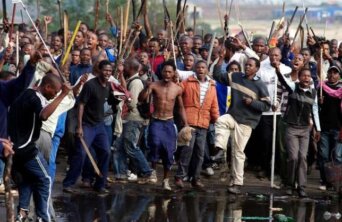
- Anti-migrant protests intensify ahead of unofficial “deadline.”
- Thousands of migrants leave South Africa amid fear of violence.
- Government warns against intimidation and urges peaceful demonstrations.
Tensions are rising in South Africa as an unofficial deadline for undocumented foreign nationals to leave the country approaches, prompting fear among migrants and renewed calls from President Cyril Ramaphosa for calm and lawful protest.
President Ramaphosa has urged citizens planning demonstrations against migrants to do so peacefully, warning against intimidation, threats or ultimatums.
He reiterated that while South Africans have the right to protest and express their views, such freedoms do not extend to violence, vandalism or the intimidation of others.
“Some foreign nationals who live in South Africa are here lawfully,” the President said in his weekly newsletter, noting that many migrants contribute to the economy through work, study, investment and family life, and are entitled to legal protection.

His remarks come amid increasing protests and growing anxiety among migrant communities, with several thousand foreign nationals from other African countries reportedly leaving South Africa in recent weeks out of fear of violence.

One undocumented Malawian migrant told the BBC he was “happy to be going back” but heartbroken to be leaving his children behind.
There are more than three million documented foreign nationals in South Africa, according to official figures.
In Durban—one of the main centres of protest—temporary transit camps housing migrants, many of them Malawian nationals, are being dismantled as authorities accelerate repatriation efforts.
Migrants described difficult conditions and uncertainty as they awaited processing, with some saying they were compelled to return home due to lack of valid documentation and growing hostility.
Others pointed to the use of xenophobic slurs and rising hostility during protests, reflecting long-standing tensions over migration in parts of the country.
Hassan Phiri, a Malawian migrant still awaiting processing, appealed for unity among African nations, saying “Africa must remain Africa” despite current challenges.
Authorities have authorised anti-migrant marches in major cities including Durban and Johannesburg, but have warned organisers against any violence. Police have also prohibited the carrying of traditional weapons during demonstrations, raising concerns about possible confrontations in areas where such items are culturally significant.
According to government figures, more than 12,000 foreign nationals have been deported or repatriated since protests intensified earlier this year, with thousands more voluntarily returning home.
Reports indicate that Ghana, Malawi, Mozambique, Nigeria and Zimbabwe have all been involved in coordinated repatriation efforts.
Xenophobic violence has long been a recurring issue in South Africa. Monitoring groups report multiple deaths this year linked to such tensions, while past outbreaks of violence have resulted in significant loss of life.
Authorities say security arrangements are in place ahead of the expected protests as the situation remains highly sensitive.