Ministry of Education Clarifies Language Policy: French, Arabic, and Chinese Are Not Compulsory
Government Clarifies Curriculum Framework, Establishing Local Languages as Exclusive Instruction Medium for Early Learners While Keeping Foreign Languages Optional
- Ghanaian languages will be the exclusive medium of instruction from Kindergarten to Primary 3.
- Primary 4 to Primary 6 will use a transitional framework combining local languages with English.
- French, Arabic, and Chinese remain purely optional subjects introduced only in later stages.
The Ministry of Education has moved swiftly to address public concerns regarding its new language policy, clarifying that foreign languages—specifically French, Arabic, and Chinese—will not be mandatory or used as the medium of instruction for young learners.
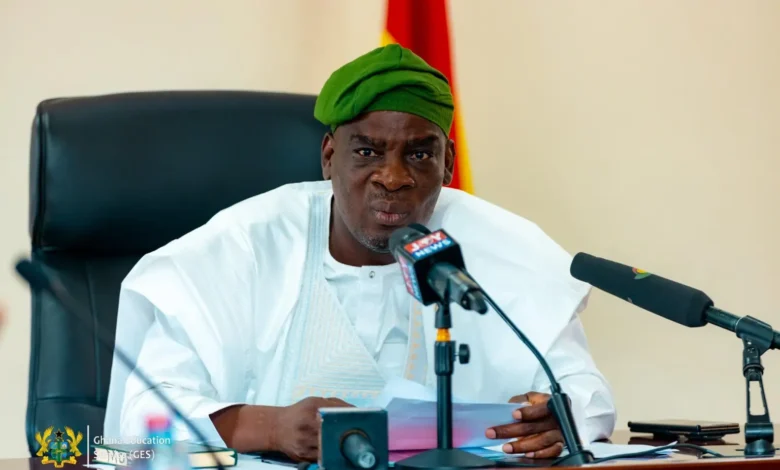
In a press statement signed by Hashmin Mohammed, Press Secretary to the Minister of Education, the government dismissed rumors that the upcoming basic school curriculum overhaul would force early-grade pupils to study in foreign languages. Instead, the Ministry emphasized that the revised curriculum is heavily rooted in local languages to build foundational literacy, numeracy, and cognitive skills.
The new educational framework outlines a clear structure for early childhood instruction:
-
Kindergarten to Primary 3: Ghanaian languages will serve as the exclusive, compulsory medium of instruction, ensuring children learn in the languages they understand best.
-
Primary 4 to Primary 6: Schools will shift to a transitional bilingual framework, combining Ghanaian languages with English to prepare students for higher levels of education.
The Ministry stated emphatically that French, Arabic, and Chinese will exist purely as optional subjects. These foreign languages will only be introduced at later educational stages and will be offered strictly based on the availability of qualified instructors and resources at individual schools.