About 4,000 Residents Cut Off After Kunfusi Bridge Collapses in Savannah Region
The collapse of the Kunfusi Bridge has disrupted access to healthcare, markets and essential services for about 4,000 residents in the Sawla-Tuna-Kalba District.
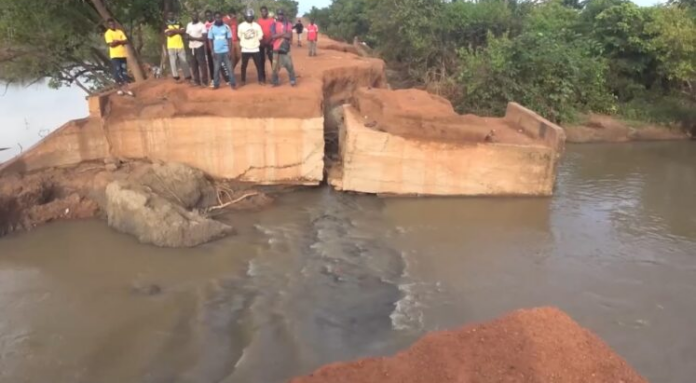
- Kunfusi Bridge collapses again
- About 4,000 residents affected
- Access to services disrupted
About 4,000 residents in the Sawla-Tuna-Kalba District of the Savannah Region have been cut off from healthcare, markets and other essential services following the collapse of the Kunfusi Bridge.
The bridge collapsed for the second time on October 4, 2026, after several days of heavy rainfall, disrupting movement between Kunfusi, Kalba, Tuna and surrounding communities.
The route is also an important link for travellers heading towards Burkina Faso and Côte d’Ivoire.
Residents say the collapse has made transportation difficult, particularly for farmers who depend on the road to convey their produce to market.
Volunteers have been helping pedestrians and motorists navigate the damaged section, while residents and local authorities are calling for urgent intervention.
The Assembly Member for the Kunfusi Electoral Area has also appealed for immediate action, citing the difficulties confronting affected communities.

Savannah Regional Minister Salisu Bia Wurbe visited the site with officials from the Regional Coordinating Council and the Sawla-Tuna-Kalba District Chief Executive to assess the extent of the damage.
Speaking to the media after the inspection, Mr Bia Wurbe said the collapse had severely affected access to healthcare and other essential services in the area.
He said efforts would be made to restore access to the affected communities while arrangements are pursued for the construction of a new bridge.
The Minister also cautioned residents against using the damaged bridge because of the risks involved and urged them to use alternative routes where possible.
Residents are meanwhile appealing for swift action to restore safe and reliable access to health facilities, markets and neighbouring communities.