Ghana Exploring Joint Bid to Co-Host Future AFCON, Says President Mahama
President John Mahama reveals plans to modernize five national stadiums and explore a joint AFCON hosting bid with neighboring Côte d’Ivoire.
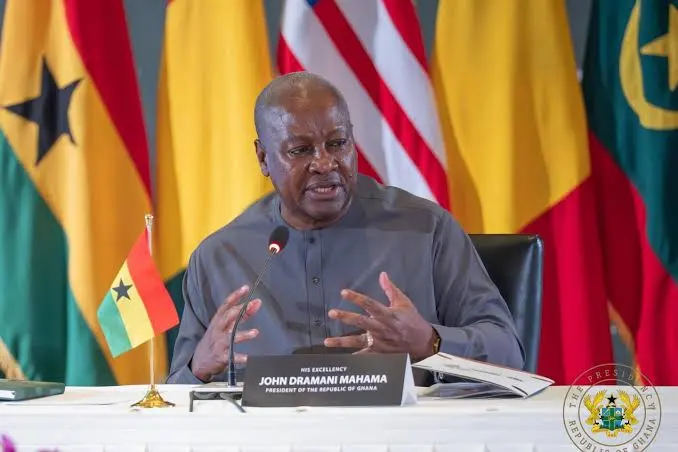
- Ghana is considering a joint bid with Côte d’Ivoire to host future editions of the Africa Cup of Nations.
- President Mahama announced plans to upgrade at least five domestic stadiums to meet strict CAF standards.
- Ghana aims to bring the continent's top tournament back to home soil for the first time since hosting AFCON 2008.
Ghana is exploring the possibility of co-hosting future editions of the Africa Cup of Nations (AFCON), with a joint bid alongside neighboring Côte d’Ivoire among the primary options under consideration, President John Dramani Mahama has announced.
The proposal forms part of a broader national strategy aimed at upgrading domestic sports infrastructure to meet international standards and bringing major Confederation of African Football (CAF) tournaments back to Ghanaian soil.
Stadium Infrastructure Overhaul
Speaking during an inspection tour of the Ho Stadium, President Mahama outlined his administration’s ambition to modernize at least five major stadiums across the country over the next few years.
“Our objective is to ensure that Ghana possesses at least five CAF-compliant stadiums. Upgrading these facilities is essential to restoring our capacity to host major international competitions,” President Mahama stated.
Ghana last hosted the continent’s flagship football tournament in 2008, with matches staged across Accra, Kumasi, Sekondi, and Tamale. The President noted that nearly two decades on, Ghana is well-positioned to step back onto the regional hosting stage.
Regional Collaboration with Côte d’Ivoire
Floating the idea of a joint partnership, President Mahama pointed to Côte d’Ivoire—host of the successful 2023 AFCON edition—as an ideal regional partner for a combined bid.

A joint hosting model aligns with recent trends in international football, where neighboring nations pool logistical, financial, and sporting resources to meet CAF’s expanded 24-team tournament requirements.
While the co-hosting idea remains an ambition rather than a submitted bid, it establishes a clear policy intent to leverage sports infrastructure as a driver for regional collaboration and national development.