NPP Primaries: Kwabena Agyepong Is the Candidate the Party Should Watch Closely and Vote For – Dr. Asah-Asante
UG Senior Lecturer says former NPP General Secretary stands out for integrity, unity, and low political baggage ahead of January 31 primaries.

- Dr. Kwame Asah-Asante says Ing. Kwabena Agyei Agyepong stands out in the NPP race due to his integrity, leadership qualities
- The former NPP General Secretary is campaigning on a message of unity, renewal, and “Leadership with Integrity,”
- With the NPP presidential primaries set for January 31, 2026, Dr. Asah-Asante believes Agyepong is the candidate the party should watch closely and rally behind
Dr. Kwame Asah-Asante, a Senior Lecturer at the University of Ghana, has thrown his weight behind Ing. Kwabena Agyei Agyepong, describing him as the candidate the New Patriotic Party (NPP) should watch closely and give their votes to ahead of the party’s presidential primaries scheduled for January 31, 2026.
Eulogising the former NPP General Secretary, Dr. Asah-Asante said Ing. Agyepong stands out among the aspirants because he carries minimal political baggage from the party’s previous government, a factor he believes gives him a clear advantage in the current race.
According to the political scientist, he has followed Ing. Agyepong’s campaign with keen interest and has been impressed by the ideas, leadership qualities, and depth of thought he brings to national and party issues.
“If the party truly believes in renewal and listens sincerely, then Ing. Kwabena Agyepong is the guy the NPP should watch and vote for,” Dr. Asah-Asante stated.
He noted that while every aspirant has strengths, many are weighed down by past associations, a challenge Ing. Agyepong does not face. However, he was quick to pose the critical question of whether party delegates have fully taken notice and whether he is the candidate they genuinely believe in.
Dr. Asah-Asante answered his own question in the affirmative, stressing that Ing. Agyepong has what it takes to lead both the party and the country if given the mandate.

Popularly known for his message of “Leadership with Integrity — Going Back to Our Roots,” Ing. Agyepong continues to gain admiration among party faithful for his humility, credibility, and unwavering loyalty to the founding ideals of the NPP. Central to his vision is the unification of a party he believes has become divided in recent years.
The 2028 flagbearer hopeful has begun the third phase of his nationwide campaign, covering the Western, Central, Ashanti, and Eastern Regions. During his first and second phases, many delegates described his message as refreshing and inspiring, citing his experience, modesty, and firm commitment to party values as qualities needed to restore confidence in the NPP.
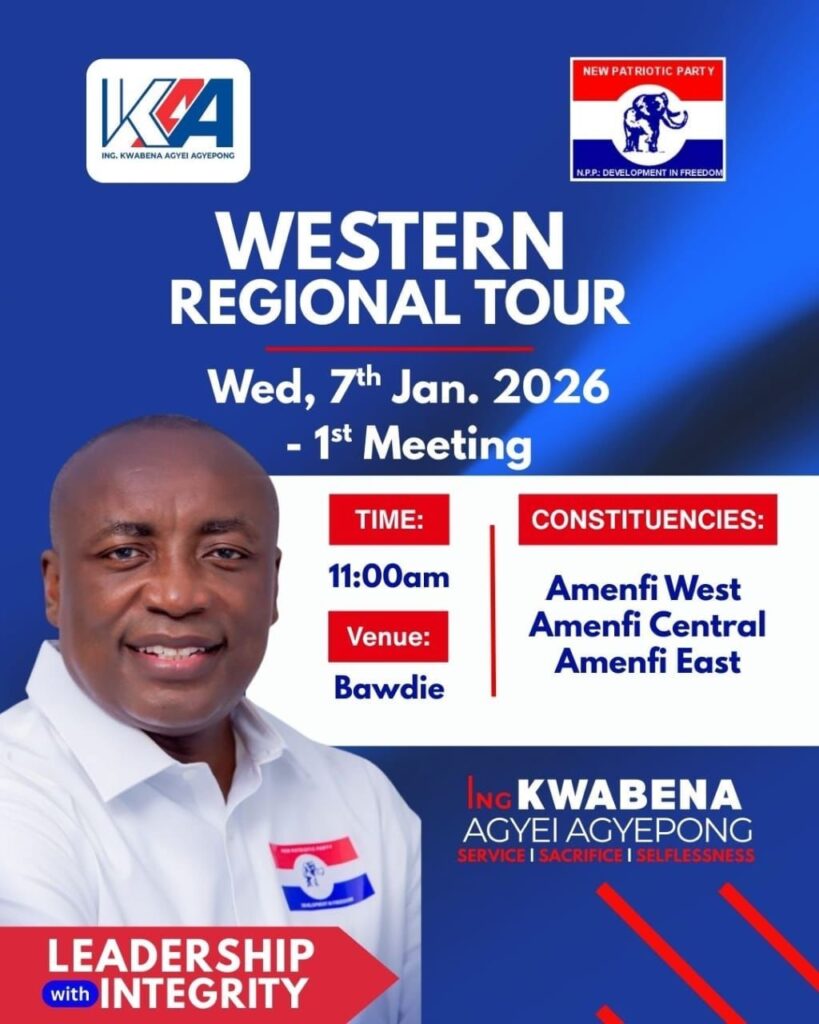
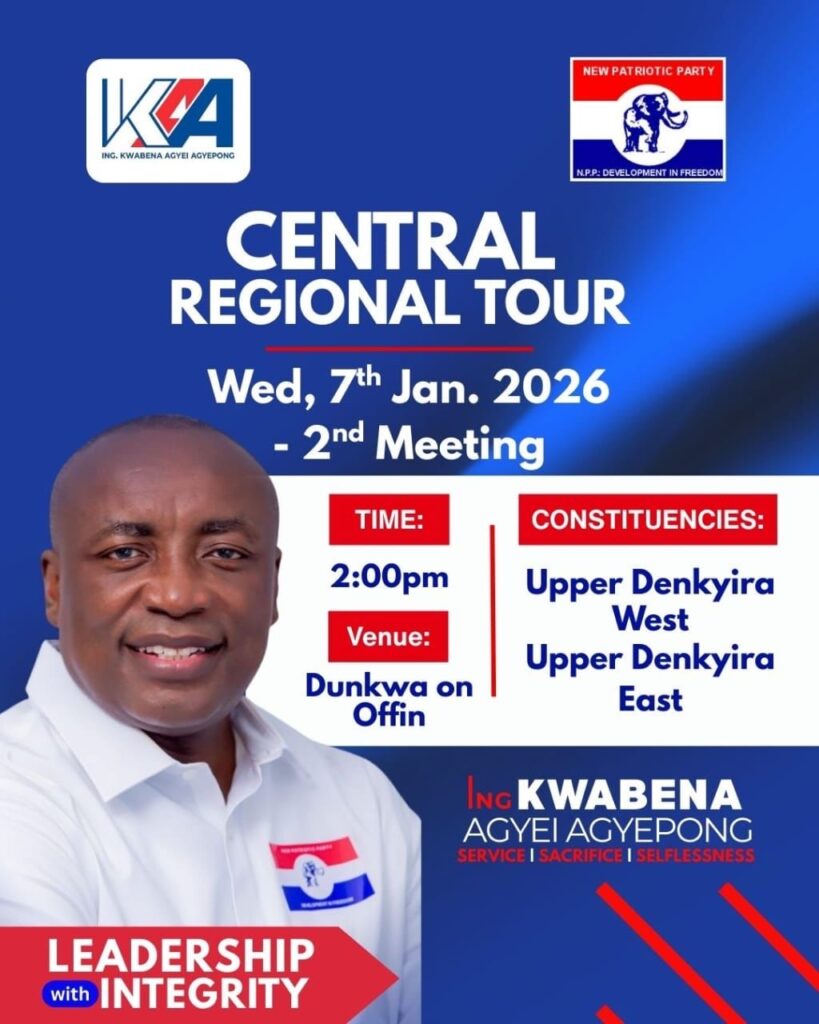
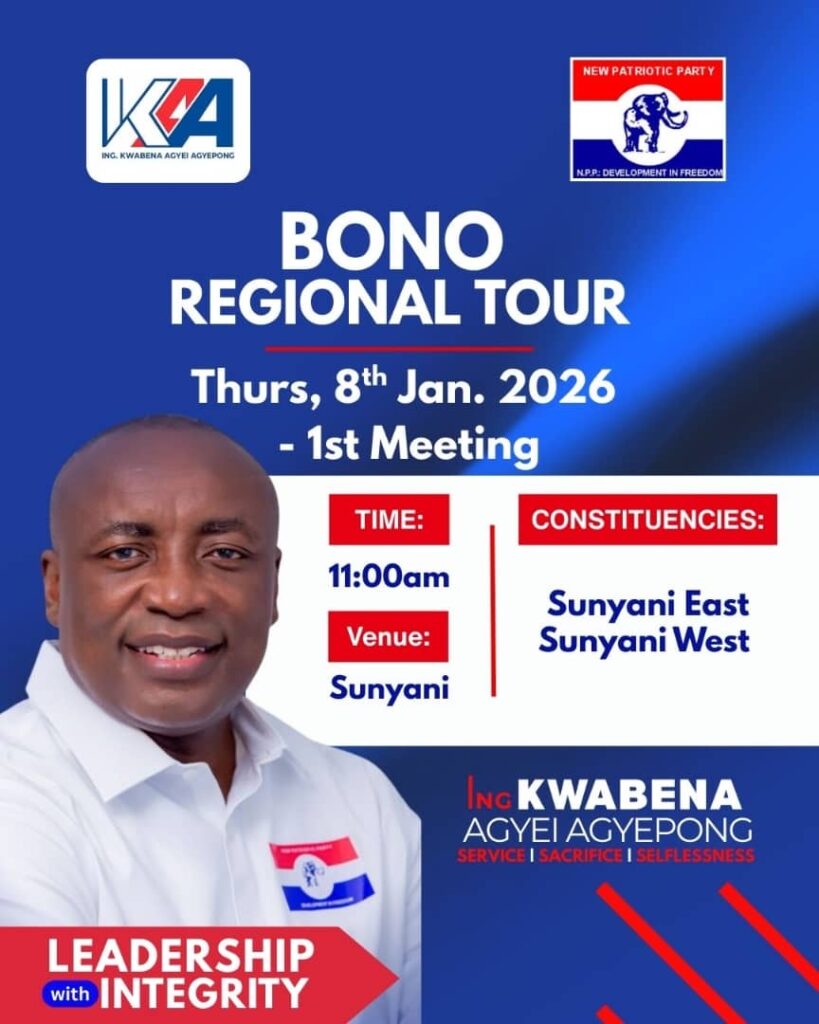
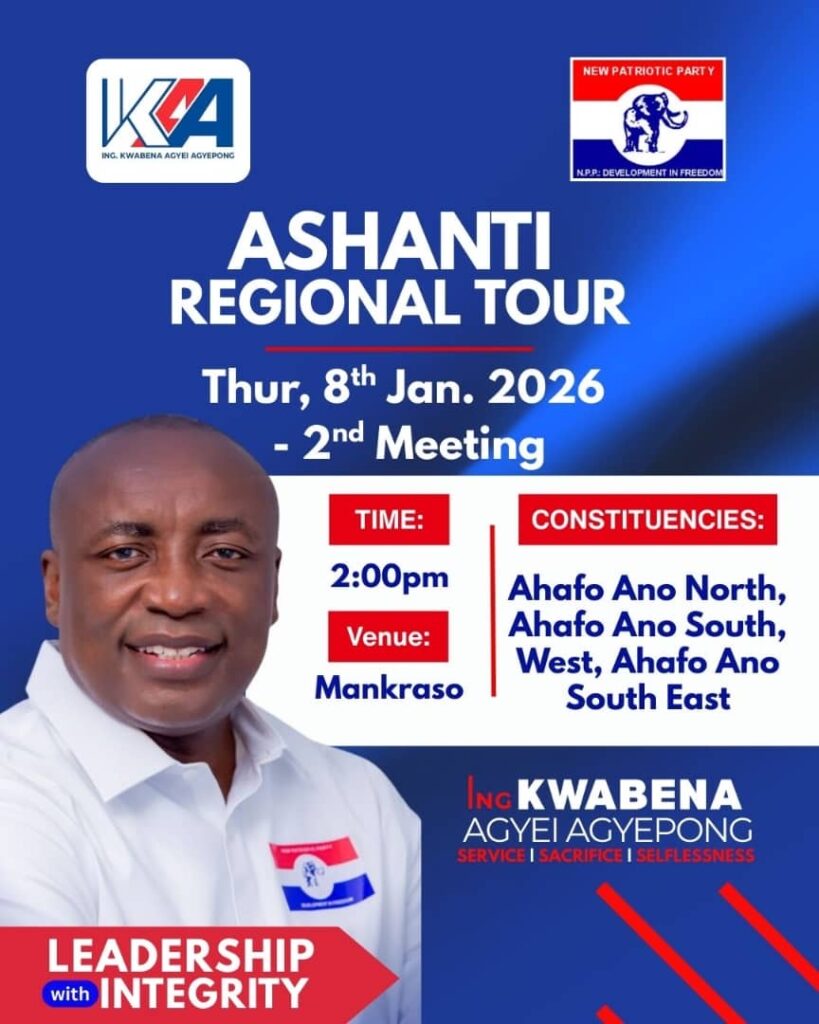
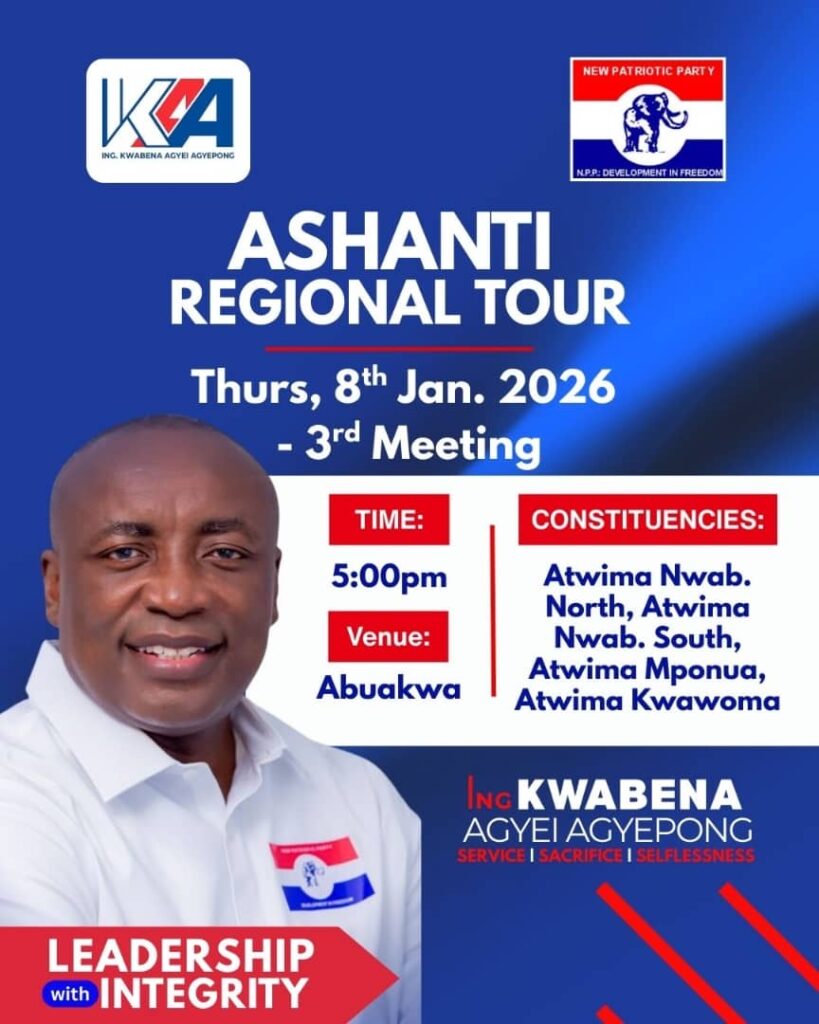
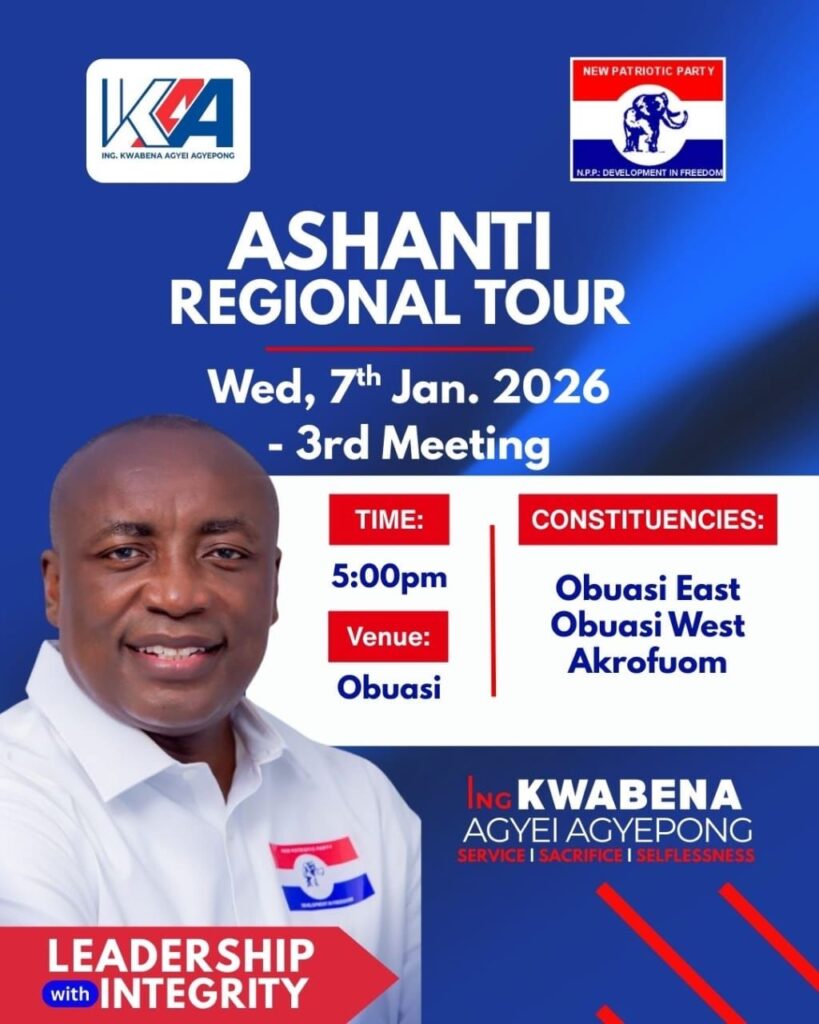
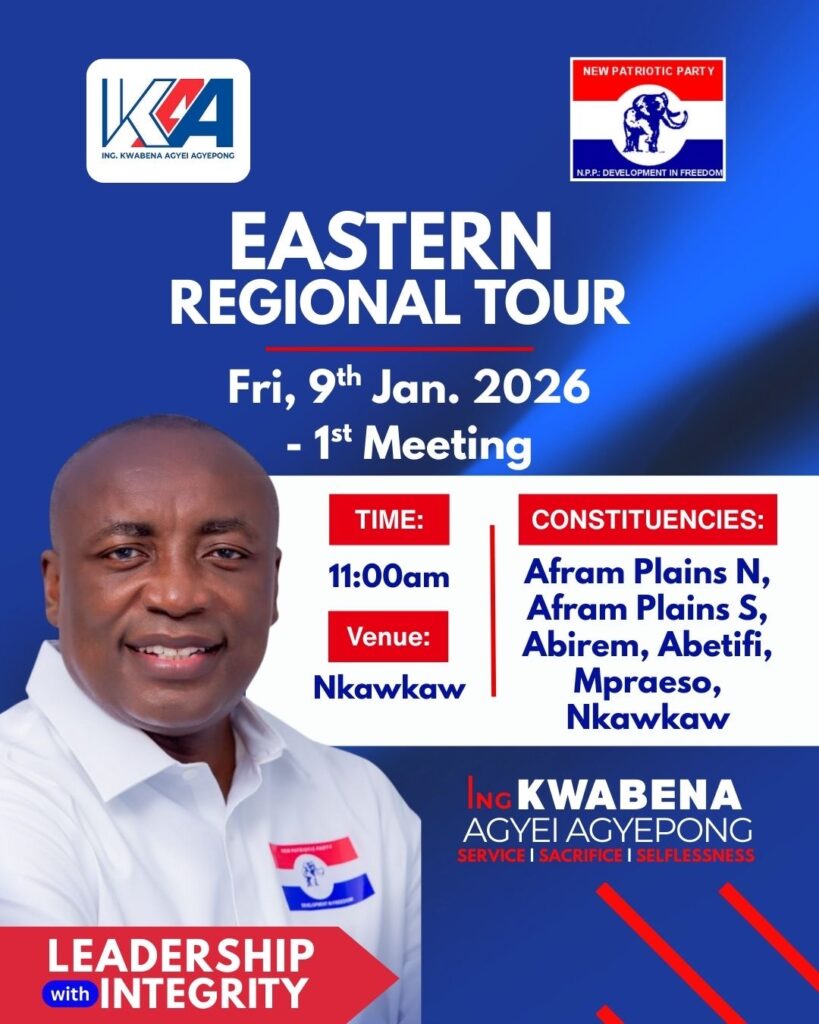
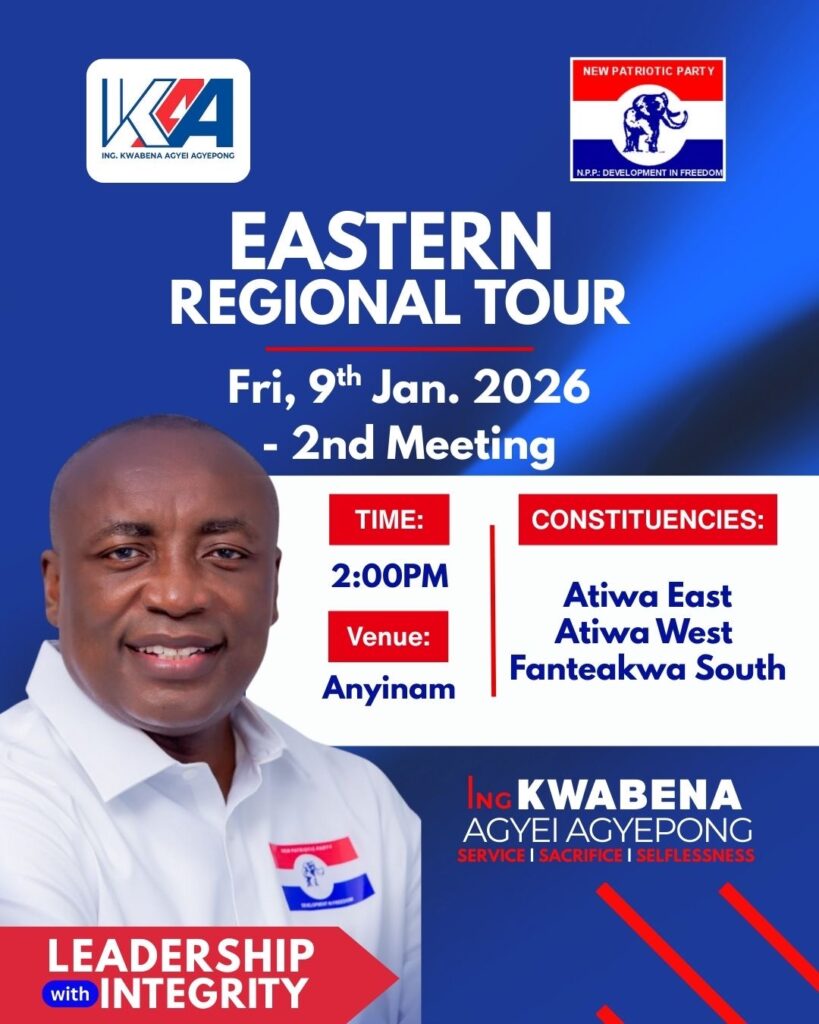
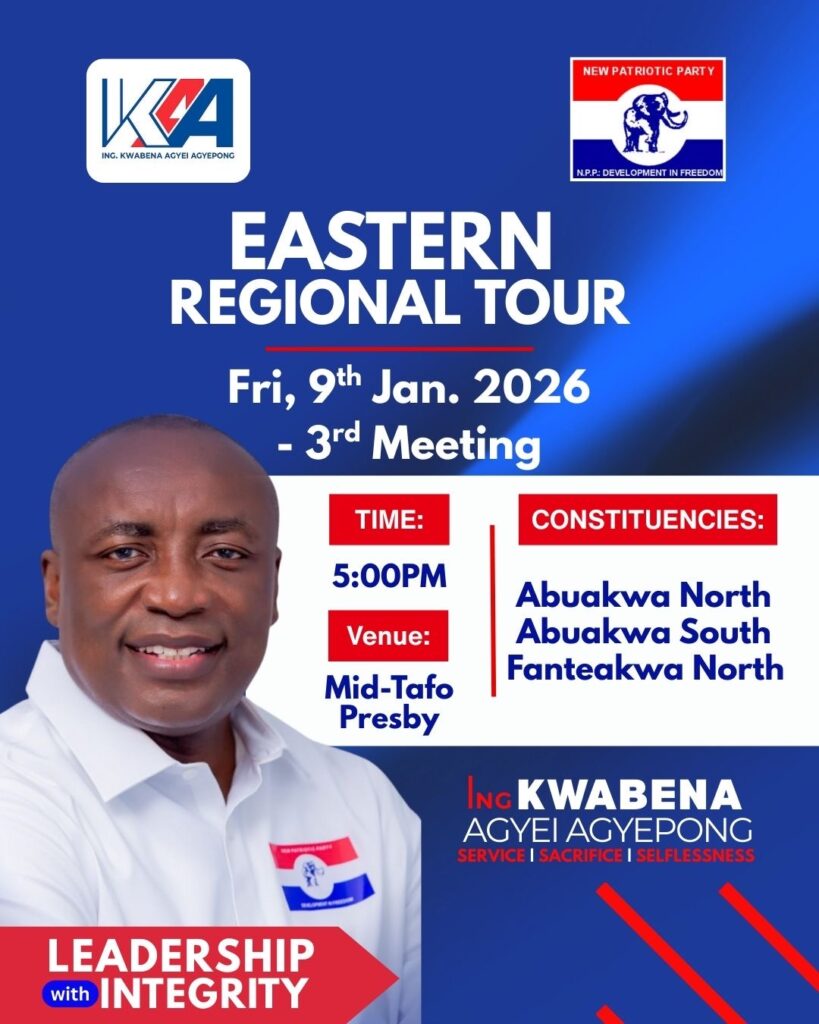
His engagements have been marked by enthusiastic receptions, with several delegates pledging their support as he intensifies outreach across key constituencies.
Reaffirming his motivation for seeking the party’s top position, Ing. Agyepong emphasized service over personality politics.
“I am an NPP member. Politics is about service to the party and the country, not blind loyalty to individuals,” he said.
Positioning himself as a candidate of renewal and unity, he appealed to delegates to rally behind him ahead of the primaries.
“I am sacrificing myself. Come and support me so we can go and bring power back for the NPP,” he declared.
As a seasoned political actor and professional engineer, Ing. Kwabena Agyei Agyepong continues to project himself as a leader anchored in integrity, competence, and unity—qualities he says are essential to rebuilding public trust and reviving the true spirit of the New Patriotic Party.