President Mahama Promises Early Start of Electrification Projects in Savannah Region
President Mahama says contractors are mobilising to begin electrification projects in the Savannah Region to support development and STEM education.
- Government says electrification works in the Savannah Region will begin within the next month.
- Mahama links reliable electricity to the success of STEM education initiatives.
- Contractors have reportedly started mobilisation after project contracts were awarded.
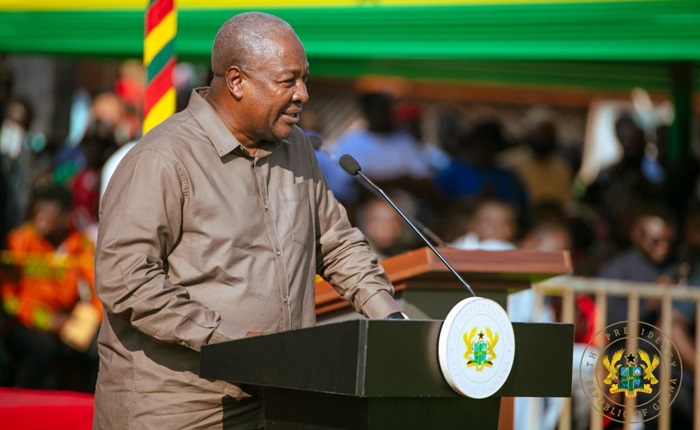
President John Dramani Mahama has assured residents of the Savannah Region that long-awaited electrification projects in the area will soon begin as government pushes ahead with efforts to improve infrastructure and expand STEM education.
The President gave the assurance during a visit to Sawla Primary School, where he inspected the implementation of Science, Technology, Engineering and Mathematics (STEM) education programmes.

Addressing concerns raised by traditional leaders over persistent electricity challenges in the region, President Mahama revealed that contracts for the electrification projects had already been awarded.
According to him, the Minister for Energy and Green Transition has confirmed that contractors have visited project sites and started mobilisation activities ahead of construction works.
He stated that actual construction and installation are expected to commence within the next month as part of broader efforts to improve electricity access in underserved communities.

President Mahama acknowledged that the Savannah Region remains one of the least electrified parts of the country and stressed the need to bridge development gaps across all regions.
“We are determined to ensure that no region is left behind. Electrification works will begin very soon, and contractors are already mobilising to site,” he said.
The President further highlighted the importance of reliable electricity to the success of STEM education and national development.
“If we want STEM education to succeed, then reliable electricity is not optional — it is essential for learning and innovation,” he added.
He reiterated government’s commitment to ensuring equitable infrastructure development and improving living conditions in the Savannah Region.