PIAC Accuses Government of Breaching Oil Revenue Law Over Fund Cap
The Public Interest and Accountability Committee says Ghana has unlawfully maintained a $100 million cap on the Stabilisation Fund instead of the legally required $584.22 million.
- PIAC says Ghana breached oil law by setting a $100m fund cap instead of $584.22m.
- It claims the limit contradicts calculations based on projected petroleum revenues.
- The committee is calling for a full review of the Petroleum Revenue Management Act.
The Public Interest and Accountability Committee (PIAC) has accused the government and Parliament of breaching Ghana’s petroleum revenue laws by maintaining the cap on the Ghana Stabilisation Fund at $100 million instead of the legally required $584.22 million between 2021 and 2025.
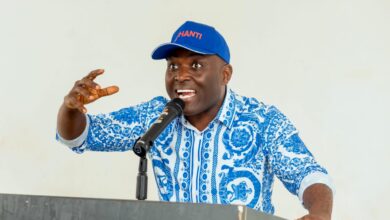
Speaking during a media engagement on PIAC’s 2025 Annual Report, the Chair of the committee’s Technical Sub-Committee, Samuel Bekoe, said the Petroleum Revenue Management Act requires the cap to be determined using the average expected petroleum revenue over a three-year period.

According to him, projected oil revenues for 2024, 2025, and 2026 total about $1.75 billion, resulting in an average benchmark of $584.22 million for 2025.
Mr Bekoe argued that both the Ministry of Finance and Parliament acted contrary to the law by approving a cap significantly lower than the amount stipulated under the legal framework.
He urged the Finance Minister to apply the correct figure in future calculations and called on Parliament to ensure strict compliance with the law during the budget approval process.

PIAC also recommended new legislation to regulate transfers of funds allocated to the government’s “Big Push” infrastructure programme from the Annual Budget Funding Amount (ABFA) to the Ghana Infrastructure Investment Fund (GIIF).
Mr Bekoe cited GIIF’s investment in the Accra International Airport as an example of the fund’s effectiveness, noting that an initial investment of $30 million between 2017 and 2025 generated about $17.9 million in interest and fees.
According to PIAC, GIIF should be brought back under the Petroleum Revenue Management Act to enable it to receive ABFA allocations for commercially viable infrastructure projects.
The committee also raised concerns over repeated amendments to the Petroleum Revenue Management Act since its introduction in 2011.
Mr Bekoe revealed that a broader review process initiated in 2018 and 2019 stalled between 2020 and 2024, despite continued changes to the law.
He noted that Parliament passed two amendments in 2025 alone, including one that limited the use of the ABFA exclusively to projects under the government’s Big Push programme.
The amendment also removed PIAC’s guaranteed funding from the ABFA and reduced the allocation to the Ghana National Petroleum Corporation (GNPC) from 30% to 15%.
A second amendment expanded investment options for the Ghana Petroleum Funds, potentially allowing the use of the Ghana Heritage Fund to support energy projects and the government’s proposed 24-Hour Economy initiative.
PIAC warned that legal and policy uncertainties remain regarding withdrawals from the Ghana Heritage Fund, particularly as 2026 marks 15 years since the enactment of the Petroleum Revenue Management Act.
The committee is therefore calling for a comprehensive review of the law to establish clearer rules for project selection, spending oversight, performance evaluation, and the long-term management of Ghana’s petroleum revenues.