Mahama Affirms African Involvement in Slave Trade Does Not Diminish Its Severity
President Mahama Emphasizes the Need for Honest History and Comprehensive Reparations Dialogue
- Mahama rejects claims that African involvement in the slave trade weakens its classification as a crime against humanity.
- The president calls for honest historical narratives and increased global awareness to shape Africa's future.
President John Mahama has dismissed claims suggesting that the involvement of some Africans in the transatlantic slave trade diminishes the severity of slavery or weakens the case for reparations.
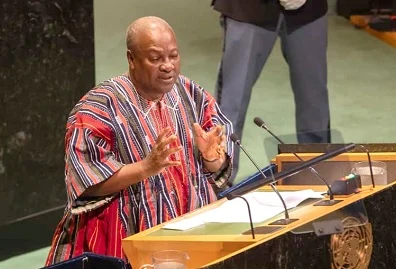
Speaking during a high-level reparations dialogue at the University of the West Indies in Jamaica, as part of his state visit, Mahama emphasized that the participation of certain Africans as intermediaries does not absolve those who conceived, financed, and institutionalized the transatlantic slave trade.

Drawing a comparison with the Holocaust, Mahama pointed out that the involvement of some Jewish individuals in Nazi activitie
s did not negate the genocide or lessen its classification as a crime against humanity. “The Holocaust happened, and six million Jews were killed. Some Jewish individuals were involved in assisting the Nazis, but that does not mean the Holocaust didn’t occur or wasn’t a crime,” he stated.
He reiterated that the same logic applies to the transatlantic slave trade, asserting that the participation of some Africans does not diminish the scale and brutality of the atrocity. “Even if Africans enslaved fellow Africans, it does not stop it from being the gravest crime against humanity,” Mahama emphasized.

The President called for a comprehensive examination of the legal, financial, and commercial systems that supported the slave trade for centuries. “We need to look at all the legal frameworks—insurance policies, auctions, and other structures that underpinned the trade,” he explained.
He highlighted that the transatlantic slave trade was a highly organized enterprise involving governments, institutions, and commercial interests, making it impossible to dismiss its historical significance based on the participation of some Africans. “It was a systematic trade; you cannot dismiss it just because some Africans participated,” he insisted. “We reject that notion.”
Mahama also stressed the importance of Africans telling their own history truthfully to shape the continent’s future. He recalled that during his school years, the focus was primarily on abolitionists, with little emphasis on the brutality and scale of slavery. “In school, we were taught about abolitionists as heroes, but the reality of the suffering endured by millions of enslaved Africans was often overlooked,” he noted. “Now, we should be able to tell our children the full truth.”
He welcomed the increasing global interest in the history of slavery and the legacy of the transatlantic slave trade, mentioning that a recent United Nations resolution on reparations has renewed efforts to understand its lasting impact. “Since the resolution, there has been a greater effort to comprehend what happened and its ongoing effects,” Mahama said.
Concluding, Mahama expressed confidence that raising awareness about this history would help societies understand their past and build a more informed future. “Awareness is growing, and understanding where we come from is essential for guiding where we are headed,” he affirmed.