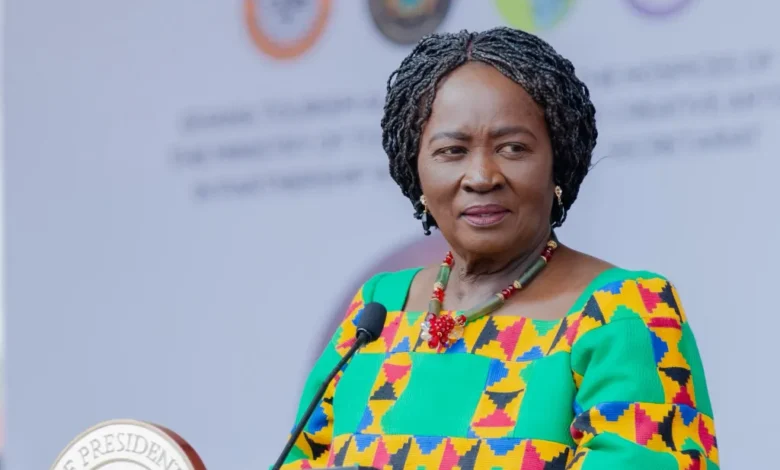
Vice President Jane Naana Opoku-Agyemang has announced Ghana’s readiness to spearhead a continental digital trade framework aimed at enhancing cross-border digital transactions and accelerating sustainable economic growth across Africa.
Speaking at the opening of the 2026 3i Africa Summit in Accra on Wednesday, the Vice President said the initiative, aligned with the African Continental Free Trade Area, would strengthen Africa’s digital sovereignty while promoting integrated and scalable trade systems across the continent.
According to her, Ghana will collaborate with Rwanda, Zambia and other partners to pilot a continental digital trade corridor designed to reshape Africa’s participation in the global digital economy.
The proposed framework will focus on mobile money interoperability, cross-border digital identity systems, mutual recognition frameworks, Know Your Customer (KYC) protocols, and harmonised electronic invoicing.
Prof. Opoku-Agyemang explained that the initiative would be integrated into the Pan-African Payment and Settlement System and supported through a regulatory sandbox that would allow member states of the AfCFTA to participate without undertaking major legislative reforms.
She identified four major pillars driving the digital trade corridor — payments, identity, regulation, and infrastructure — noting that these components were essential to removing long-standing barriers to intra-African trade.
The Vice President stressed that Africa’s political independence could not be fully realised without economic and digital sovereignty.
“Economic sovereignty in the twenty-first century is inseparable from digital sovereignty,” she stated.
Highlighting Ghana’s digital progress, she noted that the Ghana Card had become increasingly integrated into financial and public services, creating a solid foundation for cross-border KYC systems and digital trade expansion.
She further called for harmonised and interoperable regulations across African countries to ensure goods certified in one nation could be accepted seamlessly in others, including Côte d’Ivoire, Kenya and Senegal.
Prof. Opoku-Agyemang urged African leaders and stakeholders to remain committed to the digital trade agenda, warning that fragmented regulations increased the cost of doing business and negatively impacted small and medium-sized enterprises (SMEs).
She also encouraged the continent to leverage its youthful population to accelerate technological innovation and position Africa as a major player in the next phase of global digital growth.
“Whether this becomes a true continental transformation will depend on the political will, private investment and institutional discipline that countries bring to the table,” she added.