World

Ebola Vaccine May Take 9 Months as WHO Warns of Rising Death Toll

WHO warns outbreak risk remains high as vaccine development continues amid escalating cases in DRC and Uganda
Story Highlights
  • WHO says Ebola vaccine could take up to nine months to be ready
  • About 600 suspected cases and 139 suspected deaths reported in outbreak
  • Health systems in DRC and Uganda strained as infections continue to rise

The World Health Organization (WHO) says it could take up to nine months before a vaccine targeting the current Ebola strain becomes available, as concerns grow over rising infections and deaths.

According to WHO advisor Dr Vasee Moorthy, two potential “candidate vaccines” against the Bundibugyo species are under development, but neither has yet undergone clinical trials.

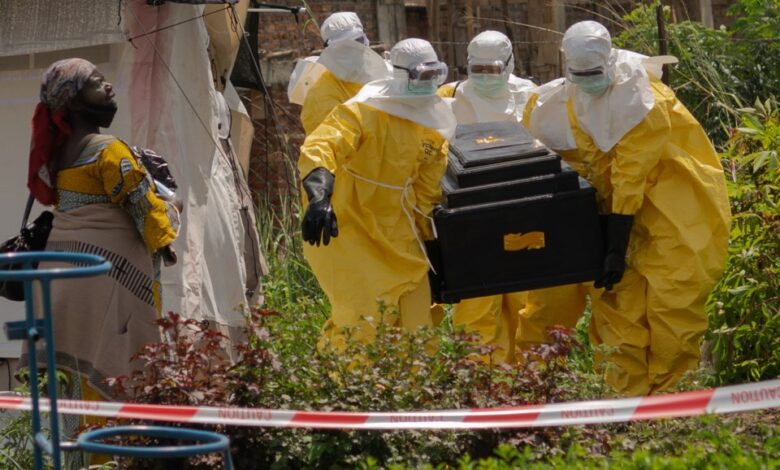
WHO Director-General Dr Tedros Adhanom Ghebreyesus said there are currently about 600 suspected Ebola cases and 139 suspected deaths, with numbers expected to increase due to delays in detection.

He noted that 51 cases have been confirmed in the Democratic Republic of Congo (DRC), where the outbreak began, along with two confirmed cases in neighbouring Uganda. One of the Ugandan cases has died.

On Sunday, WHO declared the outbreak a Public Health Emergency of International Concern, though it stressed the situation is not at pandemic level.

Dr Tedros explained that the organisation’s emergency committee concluded the outbreak is “not a pandemic emergency,” but warned that the risk remains high at national and regional levels, and low globally.

The confirmed cases in the DRC are concentrated in eastern Ituri province and North Kivu, which remain the epicentre of the outbreak. In Uganda, both confirmed cases in Kampala had travelled from the DRC.

Health officials say the outbreak in the DRC is likely far larger than confirmed figures suggest, with healthcare workers among the fatalities—raising additional concerns.

Medical facilities in affected areas are reportedly overwhelmed, with aid groups such as Médecins Sans Frontières (MSF) warning of severe overcrowding and shortages of protective equipment.

WHO says investigations are ongoing to determine how long the virus has been spreading, while efforts are focused on controlling transmission and containing the outbreak.

Related Articles

Leave a Reply

Your email address will not be published. Required fields are marked *

Back to top button