(VIDEO) Food Sovereignty Is Key to National Security, Says Agriculture Minister
Agriculture Minister Eric Opoku says recent global crises have shown that food self-sufficiency is essential for economic stability, resilience, and national security.
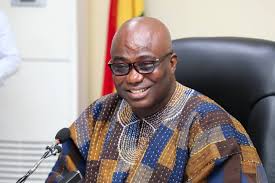
Ghana’s Minister for Food and Agriculture, Eric Opoku, has underscored the importance of food sovereignty, warning that countries that cannot produce enough food to feed their populations remain highly vulnerable to global shocks and external disruptions.
Speaking at the 4th African Inter-Parliamentary Conference on Family Sovereignty and Values in Parliament, the Minister said recent global crises have demonstrated the urgent need for African countries to strengthen local food production and reduce dependence on international supply chains.
According to Mr. Opoku, events such as the COVID-19 pandemic, the Russia-Ukraine conflict, climate-related disasters, and rising geopolitical tensions have exposed weaknesses in global food systems and highlighted the risks associated with excessive reliance on food imports.
“Recent global events have exposed the fragility of international food supply chains,” he said. “The COVID-19 pandemic disrupted transportation and logistics networks, while the Russia-Ukraine conflict significantly affected grain, fertilizer, and energy markets. Climate disasters have also reduced agricultural output in many parts of the world.”
He noted that these developments have led to increased uncertainty regarding food availability and prices, placing additional pressure on countries that depend heavily on imported food.
“A nation that cannot feed itself remains vulnerable,” the Minister stressed, adding that food security should no longer be viewed solely as an agricultural concern but as a critical component of national security.

Mr. Opoku argued that ensuring a stable and sustainable food supply is essential for economic resilience, social stability, and national development. He called on African governments to invest more in agriculture, improve food production systems, and support local farmers to enhance self-sufficiency.
The Minister also traced the origins of the modern food sovereignty movement to the Nyeleni Food Sovereignty Forum held in Mali in 2007. The landmark gathering brought together hundreds of delegates from across the world to promote policies that empower nations and communities to control their food systems and agricultural resources.
Highlighting Africa’s challenges, Mr. Opoku said the continent’s agricultural sector has often struggled due to a combination of external shocks and historical trade imbalances. He pointed to subsidy-supported imports in the 1990s that undermined local farmers, as well as more recent disruptions caused by conflicts, climate change, and global market volatility.
He emphasized that strengthening domestic food production is not only an economic necessity but also a strategic priority for safeguarding the future of African nations.
The Minister’s remarks come amid growing discussions across the continent about food security, agricultural transformation, and the need to build resilient food systems capable of withstanding future global crises.
From Prince Joe Boadi