Ablakwa: Reparations Must Support Development, Not Direct Payments
Government prioritises skills training, empowerment, and psychosocial support over direct financial payouts
- Government rejects direct cash reparations, prioritising social interventions like skills training and empowerment
- Ghana to engage countries that opposed or abstained from the UN reparatory justice resolution
- Reparations aimed at addressing long-term impacts of the transatlantic slave trade, including economic and psychosocial effects
The government has clarified that it is not pursuing direct financial payments as part of reparations, but rather support for social interventions such as skills development programmes.
This follows the United Nations’ adoption of Ghana’s resolution on reparatory justice, which recognises the transatlantic slave trade as one of the gravest crimes against humanity.
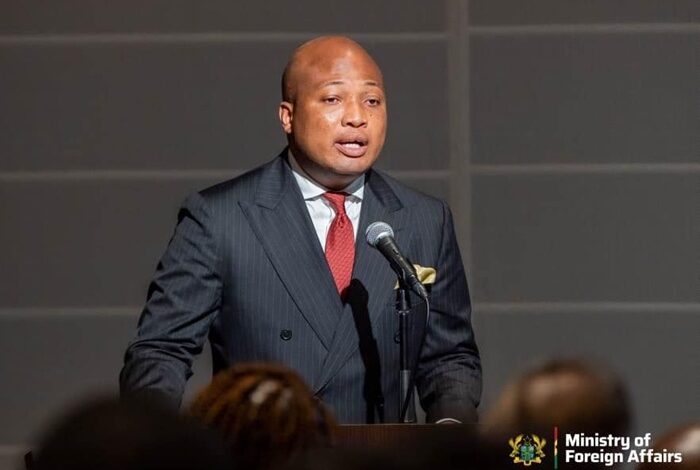
Speaking to journalists in Accra, Minister of Foreign Affairs Samuel Okudzeto Ablakwa explained that the government plans to engage countries that abstained from or opposed the resolution, with the aim of encouraging them to reconsider their stance.
“As leaders, we are not interested in direct payments. This is not a profit-making venture,” he said. “However, there is a need for financial support to fund education, empowerment initiatives, skills training, capital for entrepreneurs, and even psychosocial services.”
He also urged the public to review the CARICOM 10-point plan, noting that it outlines key areas for reparatory justice. He added that research suggests some health challenges affecting Africans today can be traced back to the conditions endured during the transatlantic slave trade, including the experiences in ships, dungeons, forts, and castles.