IMANI warns of political interference in Ghana’s insurance sector
Think tank calls on President Mahama to restore transparency and competitive procurement
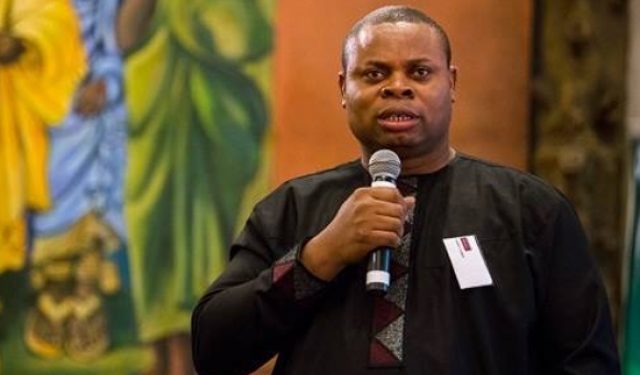
- IMANI Africa raises alarm over political influence in state insurance contracts.
- Reports of contracts being awarded through political connections rather than competitive tendering.
- Calls on President Mahama for urgent action to restore transparency and market confidence.
Policy think tank IMANI Africa has raised concerns over what it describes as the systematic takeover of Ghana’s insurance sector by “unseen political hands,” warning that growing interference is undermining market confidence and national risk governance.
During a civil society meeting at the Presidency, IMANI founder Franklin Cudjoe presented a petition to President John Dramani Mahama highlighting troubling practices where state insurance portfolios are increasingly allocated based on political influence and personal connections rather than competitive tendering or professional merit.
Titled “Safeguarding Procurement Integrity, Market Confidence, and National Risk Governance in Ghana’s Insurance Sector,” the petition follows warnings from industry veteran Sir Sam Jonah, who recently described the situation as “deeply troubling and dangerously systemic.”
“There is a growing pattern of political and socio-economic interference in insurance business in Ghana,” Sir Sam Jonah told stakeholders. “Contracts are being cancelled or reassigned not based on performance or merit, but on political directives. What was once occasional disruption has now become systemic and deeply embedded.”
Mr. Cudjoe echoed these concerns, calling for urgent presidential intervention to address what he termed “dodgy, collusive, and corrosive procurement practices.” On social media, he stated, “One sector that has been raided by unseen political hands hiding behind administrative directives to railroad legitimate contracts is the insurance sector.”
IMANI’s petition highlighted shifts in insurance renewals without evidence of competitive processes and noted the reduced participation of non-SIC insurers in state-linked placements. The think tank warned that the perception of predetermined procurement outcomes threatens market integrity and regulatory neutrality.

Cudjoe stressed that policy guidance appears to be evolving into operational direction, a trend that could have severe consequences for Ghana’s insurance market. He reminded the President that similar issues had arisen in 2014, when the Ghana Insurers Association petitioned then-President Mahama over the allocation of state insurance business. At that time, the directive was reversed, reaffirming that placements should be guided by merit, value for money, and competition.
“That the issue has resurfaced during your return to office underscores a deeper structural persistence, but also affirms that you have the credibility, precedent, and institutional memory to correct this drift decisively,” Mr. Cudjoe wrote.
IMANI is now urging President Mahama to adopt a comprehensive approach to eliminate corrupt procurement practices across the public sector, starting with the insurance industry, to restore transparency, competitiveness, and confidence in state insurance allocations.