GHEITI Sets Record Straight on Ghana’s New Mineral Royalty Regime
Organization urges dialogue between government and mining industry to ensure fairness and competitiveness
- Ghana’s mineral royalty now ranges from 5% to 12%, pegged to gold price movements
- Mining stakeholders say the new bands may be too rigid, particularly for lower prices
- GHEITI urges continued dialogue between government and industry, withdrawal of the Growth and Sustainability Levy
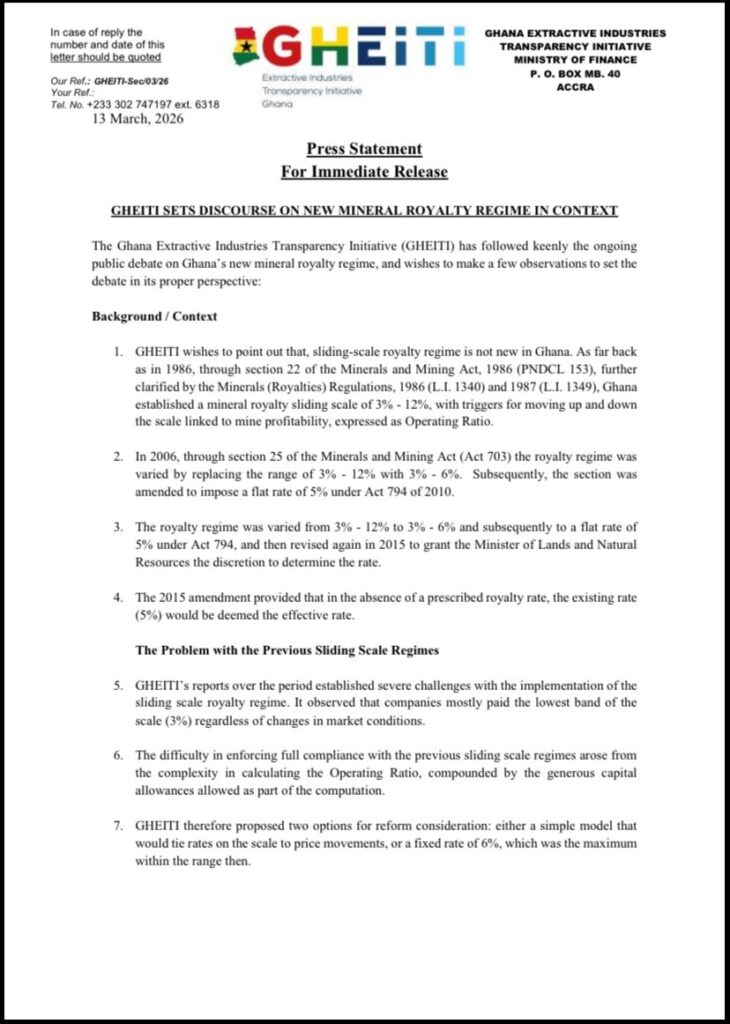
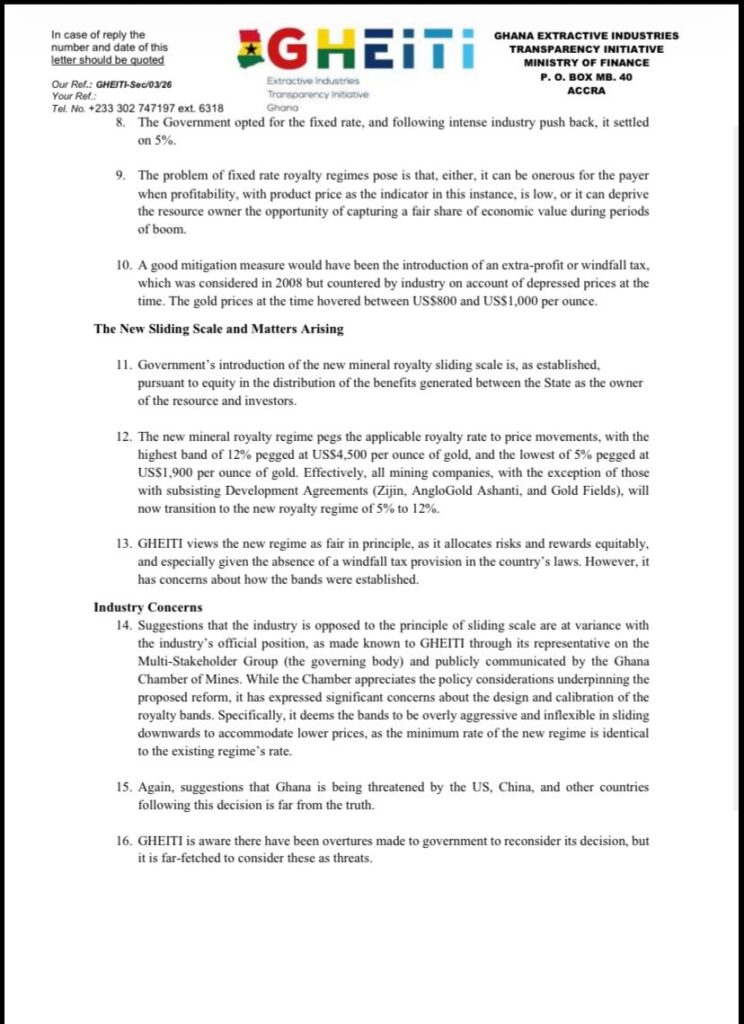
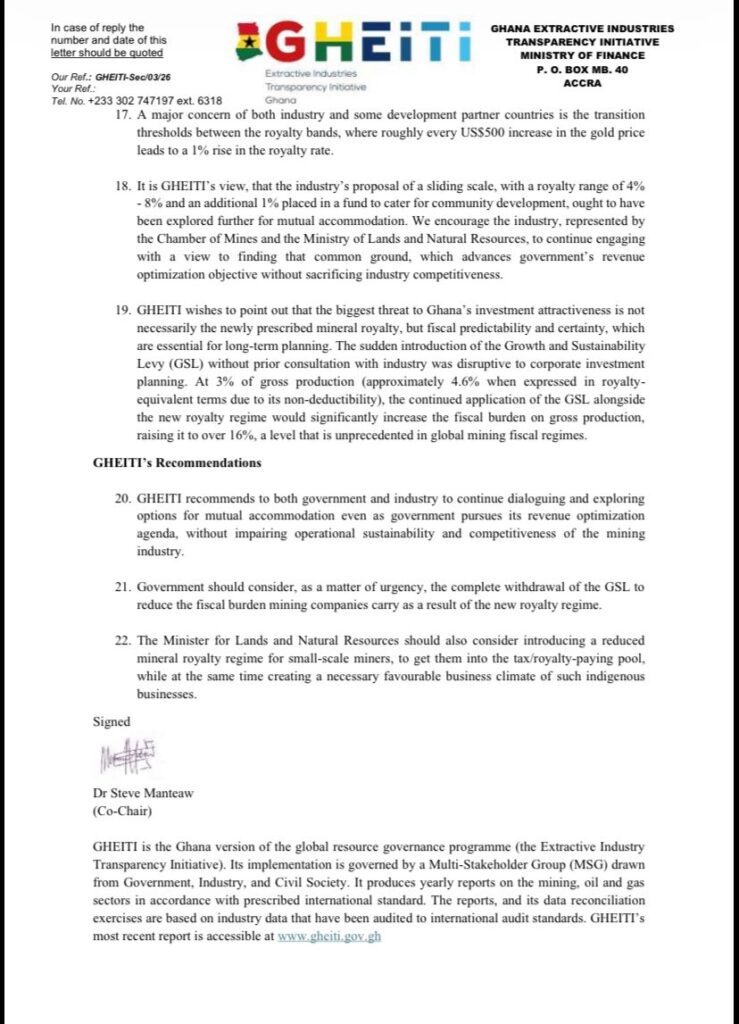
The Ghana Extractive Industries Transparency Initiative (GHEITI) has weighed in on the ongoing debate surrounding Ghana’s new mineral royalty regime, providing context on past policies, industry concerns, and recommendations for moving forward.
GHEITI highlighted that sliding-scale royalty regimes are not new to Ghana. Historical legislation dating back to 1986 introduced sliding-scale royalties of 3%–12%, later adjusted to a flat 5% rate under Act 794 of 2010.
Despite these frameworks, the implementation of past sliding-scale regimes faced significant challenges, as companies frequently paid the minimum rate regardless of market conditions, complicated by complex calculations and capital allowances.
The organization noted that government’s current sliding-scale royalty regime, which pegs rates to gold price movements between 5% and 12%, aims to ensure equitable distribution of benefits between the State and investors. Exceptions are made for companies with existing Development Agreements, including Zijin, AngloGold Ashanti, and Gold Fields.
While GHEITI described the new regime as fair in principle, it also acknowledged concerns from industry stakeholders, particularly regarding the calibration of royalty bands and the thresholds between them. The Ghana Chamber of Mines has indicated that the bands may be too rigid, particularly in accommodating lower prices.
The organization also warned that Ghana’s investment attractiveness depends more on fiscal predictability than on the royalty rates themselves.

The recent introduction of the Growth and Sustainability Levy (GSL) without prior consultation has added to the fiscal burden, potentially raising the effective cost of production above 16%—a level not seen in global mining regimes.
GHEITI’s recommendations include continued dialogue between government and industry, urgent consideration for the withdrawal of the GSL, and the introduction of a reduced royalty regime for small-scale miners to foster inclusion in the formal tax system and support local businesses.