Debt Exchange Programme Has No Impact on BoG Independence, Says Governor
Governor Dr. Ernest Addison Clarifies Role of Bank of Ghana in Debt Exchange Programme, Rejects Claims of Compromised Independence
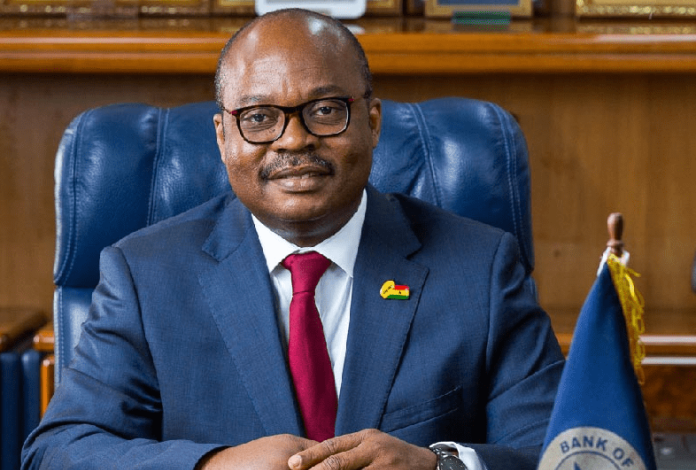
- Dr. Addison has strongly refuted claims suggesting that the central bank’s independence was compromised
- He described the debt exchange as a “pure crisis issue”
- The Governor rejected suggestions that the BoG could have done more to prevent the economic shocks.
Dr. Ernest Yedu Addison, Governor of the Bank of Ghana (BoG), has strongly refuted claims suggesting that the central bank’s independence was compromised by the government’s debt exchange programme.
In an interview, Dr. Addison made it clear that the debt exchange programme was a response to a national economic crisis and had no connection to the autonomy of the BoG.
“The debt exchange programme has nothing to do with the independence of the central bank,” Dr. Addison stated firmly.
He described the debt exchange as a “pure crisis issue,” underscoring its critical importance during a time when Ghana was on the verge of economic collapse.
“It was a life-and-death situation for all Ghanaians. At that moment, nothing else mattered. Salaries were at risk, and chaos was imminent because there was no guarantee of investment returns,” he explained.
Drawing a parallel to Sri Lanka’s economic downfall, Dr. Addison emphasized the role of the BoG in preventing a similar fate for Ghana.

“In Sri Lanka, the central bank couldn’t intervene because their foreign exchange reserves were exhausted. In Ghana, we were fortunate to still have reserves,” he pointed out.
Addressing concerns about the economic shocks that precipitated the debt exchange, Dr. Addison explained that the BoG’s involvement was not an additional shock but a vital solution to stabilize the economy.
“The IMF’s approach to the crisis was clear: the Bank of Ghana had to continue financing the government to maintain stability while we worked on the debt programme,” he stated.
He further explained the timeline, noting that the IMF’s prescribed solution involved a debt standstill, followed by the debt exchange.
“At that point, those holding government instruments were the ones affected. The debt standstill in October could have happened earlier in the year, but it would have been chaotic without the necessary policies in place,” Dr. Addison added.
The Governor rejected suggestions that the BoG could have done more to prevent the economic shocks.
“This was the solution given the circumstances the country faced,” he affirmed, stressing that the measures taken were crucial for stabilizing the economy and averting a total breakdown.
Dr. Addison also reiterated that the central bank’s actions were in line with the IMF’s framework to restore economic stability, and that the BoG’s independence was never compromised during the crisis.
His comments aim to address misconceptions about the BoG’s role in the debt exchange programme and to shift the conversation away from concerns about independence to the broader challenge of Ghana’s economic recovery.
“The recent economic challenges were about survival. Let’s not oversimplify the situation,” he concluded.