New Monkey Species with Orange Lips Discovered in DR Congo Forest
Rare black-faced primate identified after years of research in Lomami National Park.
- New orange-lipped monkey species discovered in DR Congo forest
- Species named Colobus congoensis after years of research
- Scientists warn it faces threats from hunting and habitat loss
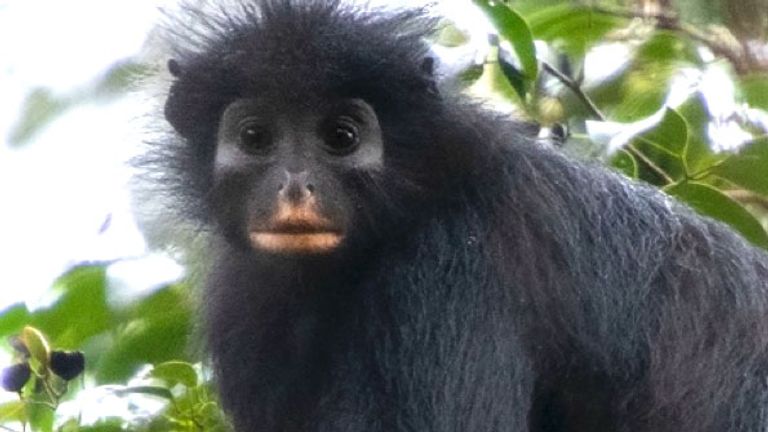
A rare monkey species with striking pinkish-orange lips and a black face has been officially identified in the forests of the Democratic Republic of Congo (DR Congo) after years of scientific research.
The black-furred primate, locally known as Likweli, lives high in the dense canopy of Lomami National Park in the central-eastern part of the country.
Conservationists first documented sightings of the unusual monkey in 2008, but only captured a single unclear photograph at the time. A later sighting years afterward prompted an international team of researchers to conduct a detailed investigation.
Using photographs, audio recordings and genetic analysis, scientists confirmed that the animal was a previously unknown species. Their findings have been published in the scientific journal PLOS One.
The monkey has been assigned the scientific name Colobus congoensis, in recognition of the rich biodiversity of the Democratic Republic of Congo. It becomes only the fifth African monkey species to be formally described in the past 75 years.
Junior Amboko, a doctoral researcher at Florida Atlantic University who contributed significantly to the study, described the discovery as a rare and remarkable encounter with a species known to very few people.


Researchers interviewed residents in 52 villages near the monkey’s habitat, but only people from eight communities reported seeing the animal. Scientists said the monkeys are highly secretive and spend most of their time hidden high in the forest canopy.
Colobus congoensis belongs to the colobus monkey family, a group of leaf-eating African primates known for their lack of thumbs.
Professor Kate Detwiler of Florida Atlantic University explained that colobus monkeys play an important role in forest ecosystems by helping process seeds and supporting forest regeneration.
Scientists believe the monkey’s unusual facial markings may help individuals identify each other or play a role in attracting mates. The species also produces a distinctive deep roaring call, which researchers say is often heard before the animal is spotted.
Although the species has only recently been identified, researchers believe it may already be vulnerable due to its limited habitat range and hunting for bushmeat.
Scientists hope the official recognition of Colobus congoensis as a distinct species will strengthen conservation efforts and lead to formal protection measures.
Further studies are planned to determine the monkey’s population size, habitat range and behaviour.