June 4 Must Be Remembered, Not Erased from Ghana’s History — Asiedu Nketia
NDC Chairman says the annual commemoration preserves Ghana's history, educates the youth, and reminds citizens that democracy—not military intervention—is the best way to address bad governance

- NDC to commemorate the 47th June 4 Anniversary at Banda
- Asiedu Nketia says military coups are not solutions to bad governance
- He argues democracy provides better mechanisms for correcting governance failures
National Chairman of the governing National Democratic Congress (NDC), Johnson Asiedu Nketia, has defended the continuous commemoration of the June 4 Uprising.
He insisted that the historic event remains an important chapter in Ghana’s democratic journey and must be remembered for the lessons it offers future generations.
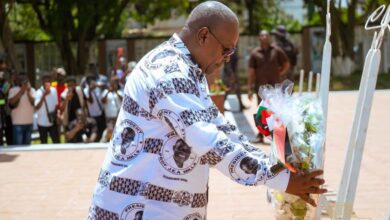
Speaking to Kwame Tanko on the Ghana Se Sen Morning Show on Lawson TV/Radio ahead of the 47th anniversary of the June 4 Revolution, Asiedu Nketia said this year’s commemoration will be held at Banda in the Bono Region, where party faithful and sympathizers will gather to reflect on the circumstances that triggered the uprising and how Ghana can prevent similar situations from occurring again.

According to him, the annual gathering is not intended to glorify military interventions but rather to educate Ghanaians, especially the youth, about the historical factors that led to the June 4, 1979 revolt and the lessons that emerged from it.
“There will be a meeting as we do every year to remember what triggered the June 4 Revolution and ensure that such things do not happen again,” he stated.

Military Coups Are Not the Answer
Reflecting on Ghana’s democratic progress over the past four decades, the NDC Chairman noted that the June 4 experience has taught the nation valuable lessons, particularly that military takeovers are not the solution to bad governance.
He observed that despite persistent societal challenges such as corruption and bribery, democratic institutions have proven more effective in addressing governance concerns than unconstitutional changes of government.
“Nobody has an appetite for coup d’état today because we have seen that military takeovers are not the solution to bad governance,” he emphasized.
Asiedu Nketia stressed that Ghana’s democratic stability now provides avenues for citizens to hold leaders accountable through elections, public discourse, and constitutional processes.
“It is becoming increasingly clear that when things go wrong, we can use democratic structures to correct them. Democracy itself provides mechanisms for addressing bad governance,” he added.
History Must Not Be Rewritten
The veteran politician strongly opposed calls for the June 4 commemoration to be discontinued, arguing that doing so would amount to erasing a significant part of Ghana’s history.
According to him, nations develop by learning from their past, whether positive or negative, and Ghana cannot afford to ignore a historical event that shaped its political development.
“We cannot ban the June 4 celebration because you cannot rewrite the history of this nation. It must be commemorated so that we can draw positive lessons from it.”
He further described history as a crucial component of national identity and culture, insisting that younger generations must be taught the causes and consequences of the uprising whenever the anniversary is observed.
A Defining Moment in Ghana’s Political History
The June 4 Uprising, led by former President Jerry John Rawlings and other junior military officers in 1979, emerged amid widespread public dissatisfaction over corruption, economic hardship, and perceived injustice within the political and military establishment.
The uprising eventually paved the way for significant political changes and remains one of the most debated events in Ghana’s history. While opinions remain divided on some aspects of the revolution, many political analysts agree that it profoundly influenced Ghana’s governance and democratic evolution.
June Is NDC’s Historic Month
Asiedu Nketia also pointed out that June occupies a special place in the history of the NDC, as several landmark events associated with the party occurred during the month.
“June is NDC’s month. A lot of important activities and events connected to the NDC happened in June, so it is not only about celebrating the revolution.”
He reaffirmed the party’s commitment to continuing the annual June 4 commemoration, maintaining that the occasion serves as an opportunity for reflection, education, and the preservation of Ghana’s political history.