President Mahama Announces End of SHS Double-Track System by 2027
Government to upgrade 50 schools under $300m World Bank-backed STARR-J project to expand access and infrastructure.
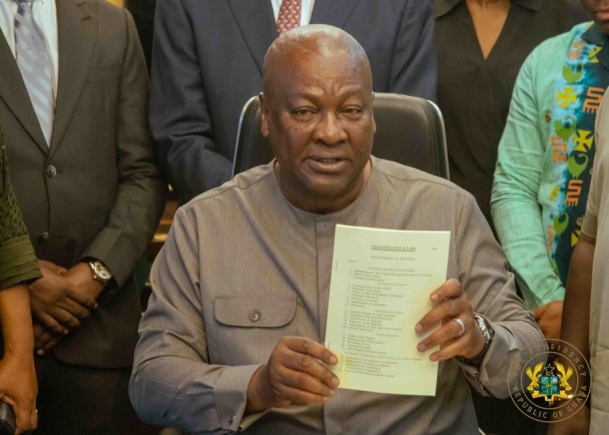
- President Mahama says double-track system will be phased out by 2027.
- 50 senior high schools to be upgraded under $300m STARR-J project.
- Community day schools and teacher training reforms included in plan.
President John Dramani Mahama has announced that Ghana will phase out the double-track system in senior high schools (SHSs) by 2027, following a major infrastructure expansion programme aimed at easing pressure on existing facilities.
Speaking in Accra, the President said the policy shift will be achieved through the upgrading of 50 senior high schools under a $300 million World Bank-funded initiative known as the Transformative Secondary Education for Access, Results and Relevance for Jobs (STARR-J) project.

Under the programme, 30 Category C schools will be upgraded to Category B status, while 20 Category B schools will be elevated to Category A, significantly expanding their capacity and improving infrastructure.
President Mahama stated that the reforms are designed to permanently eliminate the need for the double-track system, which was introduced in 2018 as a temporary solution to rising enrolment under the Free SHS policy.
“By 2027, there should be no secondary school implementing a double track system in Ghana,” he said, adding that the investment is aimed at improving access, equity and quality in secondary education.

He explained that the STARR-J project goes beyond physical infrastructure, noting that it is intended to strengthen teaching and learning outcomes across the country.
According to him, the programme will also revive and expand the community day school concept through the construction of new E-block facilities in urban and peri-urban areas to reduce congestion in boarding schools.
“This will help ease pressure on existing boarding schools by allowing more students to attend schools within their communities,” the President said.
President Mahama further indicated that teachers will benefit from continuous professional development programmes, including training in digital literacy and emerging technologies such as artificial intelligence.
He also announced reforms to the teacher promotion structure, stating that career progression will now be based on merit, performance, experience and service, rather than the availability of administrative positions.
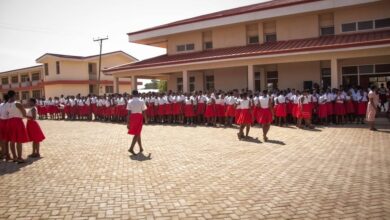
The double-track system was introduced in 2018 after enrolment surges from the Free SHS policy created severe infrastructure constraints in public SHSs, forcing schools to operate in shifts.
Although the system expanded access, it also attracted criticism from stakeholders who pointed to disruptions in academic calendars, long periods at home for students, and increased pressure on teachers.
With the new investment and reforms, the government aims to return all senior high schools to a single-track academic calendar by 2027, marking a major shift in Ghana’s secondary education system.