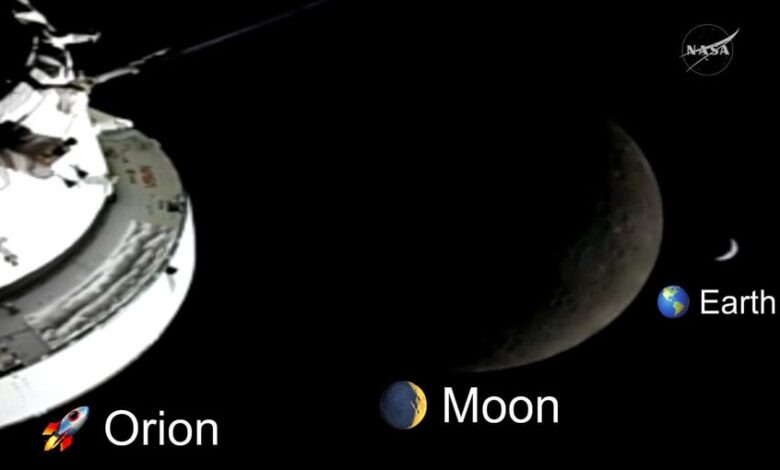
The four astronauts of NASA’s historic Artemis II Mission are preparing for a dramatic and high-risk return to Earth after making history farther from home than any humans before them.
Reid Wiseman, Victor Glover, Christina Koch, and Canadian Space Agency astronaut Jeremy Hansen are expected to re-enter Earth’s atmosphere in a blazing “fireball” before splashing down off the coast of San Diego, California, in the Orion capsule just after 8 p.m. local time on Friday.
During their 10-day mission, the crew flew beyond the Moon’s far side, setting a new record distance of more than 405,000 kilometres from Earth—surpassing the Apollo 13 record that stood for 56 years.
On their return journey, the astronauts will hurtle back at speeds of up to 40,000 km/h, enduring one of the most dangerous phases of spaceflight as the Orion spacecraft withstands extreme heat and friction. Temperatures around the capsule are expected to soar beyond 2,500°C, forming superheated plasma that temporarily cuts off communication during re-entry.
As the spacecraft slows, a carefully timed sequence of 11 parachutes will deploy to reduce its speed from thousands of kilometres per hour to a gentle ocean splashdown landing of about 30 km/h.
Once in the ocean, recovery teams will retrieve the crew and transport them aboard the USS John P. Murtha, where they will undergo medical checks before returning to NASA’s Johnson Space Center in Houston.
Despite the intense risks of re-entry, NASA officials have expressed confidence in the Orion heat shield and overall mission safety, marking Artemis II as a major step toward future human exploration of the Moon and beyond.