President Mahama: Constitutional Reforms Will Be Guided by National Interest
President Mahama says constitutional reforms will strengthen governance, accountability, and reflect the aspirations of Ghanaians through an inclusive process.
- Constitutional reforms to be transparent and inclusive.
- Cabinet reviewing key constitutional amendment proposals.
- Mahama urges stakeholder participation in the reform process.
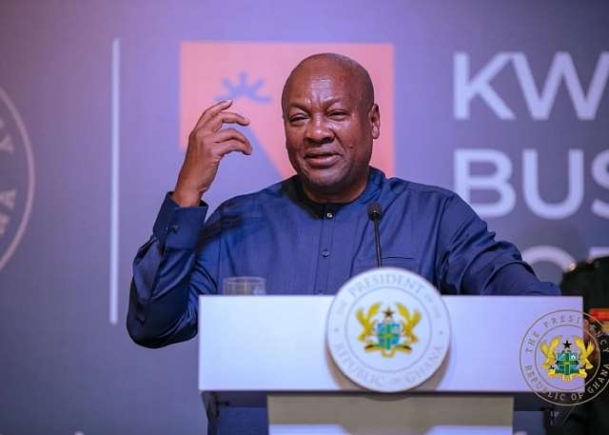
President John Dramani Mahama has reaffirmed his government’s commitment to ensuring that Ghana’s ongoing constitutional reform process is transparent, inclusive, and driven by the national interest.
Speaking at the 4th Annual Convening of the Ghana Civil Society Forum 2026 in Accra, President Mahama outlined his administration’s governance reform agenda and underscored the vital role of civil society in shaping the country’s development.

He said the government’s commitment to participatory governance was demonstrated through the National Economic Dialogue, which brought together labour unions, business leaders, academics, civil society organisations, and development partners to deliberate on key national issues.
The President noted that engagements held with civil society groups at the Presidency earlier this year were candid and productive, focusing on governance, accountability, anti-corruption, social protection, and national development priorities.
According to him, these discussions reinforced the importance of civil society as an active partner in nation-building rather than a passive observer.

“The message is simple: good governance is strengthened when citizens participate, when diverse voices are heard, and when people have ownership of decisions that affect their lives,” President Mahama said.
Addressing the constitutional review process, the President explained that the Constitutional Review Committee had completed its nationwide consultations and submitted its recommendations to Cabinet, where they are currently under consideration.
Among the proposals are the establishment of an independent Emoluments Commission, reforms to the appointment of ministers from Parliament, an extension of the tenure of elected officials from four to five years, and changes to the appointment process for Metropolitan, Municipal, and District Chief Executives (MMDCEs).
President Mahama said that once Cabinet concludes its review, the government’s position will be presented to Parliament to initiate the constitutional amendment process.
He described the exercise as more than a legal or technical review, saying it presents an opportunity to renew Ghana’s democratic governance by strengthening accountability, decentralisation, and public confidence in state institutions.
“We are determined that this process will be transparent, inclusive, and guided by the national interest,” he stressed.
The President called on civil society organisations, traditional authorities, youth groups, and other stakeholders to remain actively involved throughout the process, noting that the Constitution belongs to the people and should reflect their collective aspirations.
He also highlighted the recently enacted Governance Advisory Council Act as a significant step toward promoting transparency and accountability in public institutions.
According to President Mahama, the new law establishes an independent multi-stakeholder body to monitor governance standards and uphold integrity across the public sector, with representation from civil society to ensure citizens’ voices remain central to the process.
Concluding his address, the President emphasised that Ghana’s progress depends on collaboration, trust, and a shared commitment to national development.
“Together, we can build a Ghana where development is inclusive and every citizen feels empowered to contribute to national progress,” he said.