Kusi Adomako Urges Government to Declare Road Crashes a Public Health Emergency
CUTS International Director calls for urgent action to curb rising road deaths.
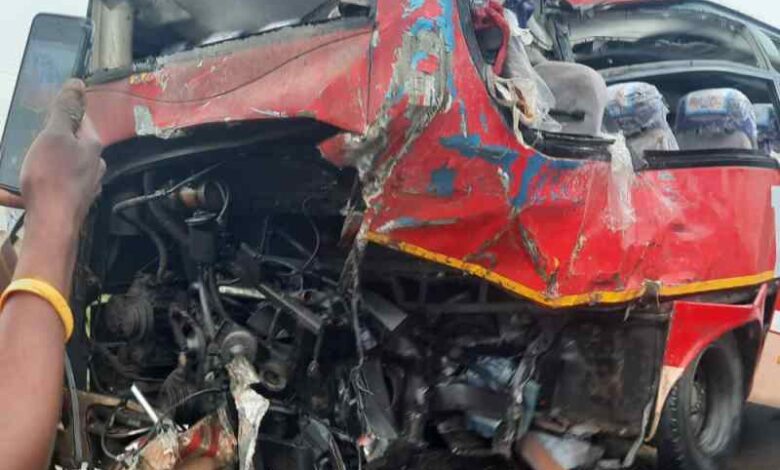
- Over 2,500 people reportedly died in road crashes last year.
- Kusi Adomako calls for stronger road safety investment.
- He backs increased police presence and automated enforcement.
Director of the West Africa Regional Centre of CUTS International, Appiah Kusi Adomako, has called on the government to declare road crashes a public health emergency, arguing that the number of lives lost on Ghana’s roads demands urgent national action.
Mr Adomako said road crashes could no longer be treated solely as a transport or law-enforcement issue.

He said more than 2,500 people died in road crashes in Ghana last year, describing the situation as a serious national crisis that requires a stronger and more coordinated response.
“For me, we have even been saying that government should declare road crashes a public health emergency,” he said.
According to him, an average of about eight people losing their lives in road crashes each day should prompt the government to introduce emergency measures and commit greater resources to road safety.

Calls for Stronger Investment
Mr Adomako compared Ghana’s response to road crashes with its handling of the COVID-19 pandemic, noting that the country mobilised significant resources and implemented extensive measures to contain COVID-19 despite recording fewer deaths.
He questioned the disparity in attention and investment between the two issues, particularly given that road crashes continue to claim lives.
“When COVID came, Ghana had less than 1,000 people dying from COVID within the period of 2020 and 2022 when we stopped the protocols,” he said.
He noted that the COVID-19 response included public education, enforcement measures and substantial government expenditure, while road safety had not received a similar level of investment.
Mr Adomako therefore called for a fundamental shift in Ghana’s approach to road safety, stressing the need for sustained investment in prevention rather than relying mainly on enforcement after crashes occur.
More Police Presence and Use of Technology
He called for a stronger police presence on the roads, arguing that visible enforcement could deter dangerous driving and encourage motorists to comply with traffic regulations.
“If we want to enhance road safety, we need to see the police presence on the road,” he said.
He also welcomed provisions in Ghana’s new traffic legislation that allow for automated enforcement of traffic offences.
According to him, technology can help identify and sanction traffic violations while reducing the burden on police officers who would otherwise have to monitor road users manually.
He described automated enforcement as an important innovation, noting that effective road safety measures should not depend entirely on the physical presence of law enforcement officers.
Shared Responsibility
Mr Adomako, however, stressed that increased policing and technology alone would not resolve Ghana’s road safety challenges.
He said addressing the crisis would require a collective effort involving motorists, pedestrians, government agencies, law enforcement authorities and other stakeholders.
He maintained that road safety must be treated as a shared national responsibility if Ghana is to significantly reduce preventable deaths on its roads.