Private Citizen Challenges Ghana’s Legal Vacation System at Supreme Court
Elorm Kwami Gorni is asking the Supreme Court to declare rules suspending sittings of the apex court and Court of Appeal during the legal vacation unconstitutional.
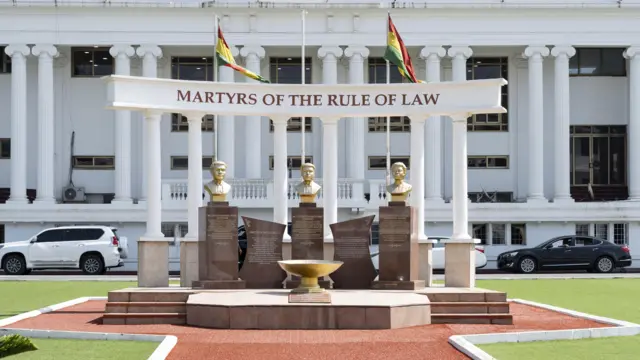
- Citizen sues over court break.
- He says the system causes delays.
- Rotational and vacation sittings suggested.
A private citizen, Elorm Kwami Gorni, has dragged the Attorney General, Dominic Ayine, and the Chief Justice, Paul Baffoe-Bonnie, to the Supreme Court over Ghana’s legal vacation arrangements.
Mr Gorni is challenging the constitutionality of the annual suspension of sittings at the Supreme Court and Court of Appeal from August 1 to September 30.

The suit, filed on July 28, 2026, invokes the Supreme Court’s original jurisdiction under Articles 2(1) and 130(1) of the 1992 Constitution.
Challenge to legal vacation
Mr Gorni argues that the two-month suspension of sittings at the country’s two highest appellate courts undermines citizens’ constitutional right to access justice within a reasonable time.
While the High Courts continue to operate during the legal vacation through designated vacation courts, he contends that the Supreme Court and Court of Appeal do not maintain regular sittings throughout the period.

According to the plaintiff, the arrangement can leave litigants with cases pending before the two appellate courts waiting until the end of the vacation before their matters can be heard.
He argues that the suspension could delay the determination of appeals, constitutional cases, applications for stay of execution, interlocutory applications and judicial review proceedings.
Rules under constitutional scrutiny
Mr Gorni is asking the Supreme Court to declare Rule 61(b) of the Court of Appeal Rules, 1997 (C.I. 19), and Rule 82 of the Supreme Court Rules, 1996 (C.I. 16), unconstitutional to the extent that they permit the suspension of sittings during the legal vacation.
He maintains that the rules and their implementation are inconsistent with Articles 19(1), 23, 33, 125 and 296 of the Constitution.
The plaintiff further argues that decisions concerning when the courts sit constitute an administrative function and must therefore comply with constitutional standards of fairness and reasonableness.
He has emphasised that his challenge is not intended to prevent judges from taking annual leave or having periods of rest.
Instead, he wants the Supreme Court to determine whether judicial leave can be organised without effectively suspending the constitutional functions of the Supreme Court and Court of Appeal for two months.
Calls for alternative arrangements
Among the reliefs being sought is an order directing the Chief Justice to consider alternative arrangements that would allow the appellate courts to continue hearing cases during the legal year.
Mr Gorni has proposed options including rotational sittings, vacation panels and staggered judicial leave.
He argues that such measures could ensure continuity in the hearing of cases while preserving judges’ entitlement to annual leave.
The case brings Ghana’s longstanding legal vacation system under constitutional scrutiny and raises broader questions about access to justice, judicial administration and the timely resolution of cases before the country’s two highest appellate courts.