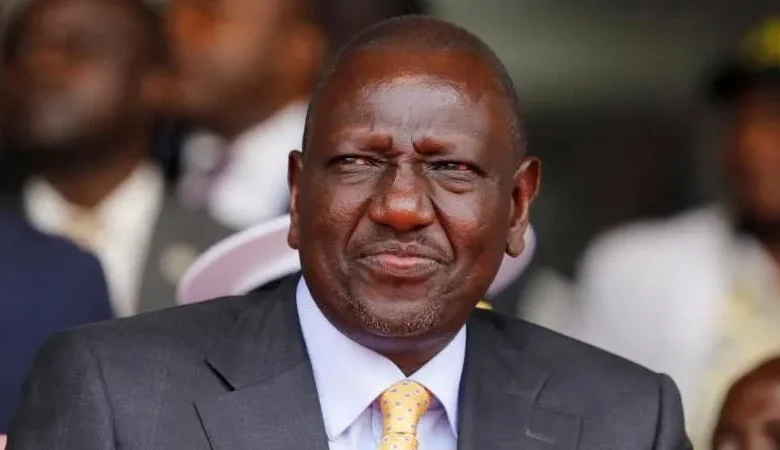
William Ruto has come under fire after remarks he made about Nigerian accents sparked widespread criticism online.
Speaking to members of the Kenyan diaspora in Italy, the president claimed that Nigerian-accented English can be difficult to understand, suggesting that listeners might need a translator. He contrasted this with Kenya’s education system, which he said produces some of the best English speakers globally.
The comments quickly triggered backlash from Nigerians and other Africans on social media, many of whom accused him of belittling a fellow African nation. Critics argued that English, as a colonial language, should not be used as a benchmark for intelligence or national development.
Countries like Nigeria and Kenya both use English officially, but their accents differ due to the influence of indigenous languages. Nigeria’s linguistic diversity—spanning hundreds of local languages—has shaped its unique speech patterns, while Kenya’s mix of Bantu, Nilotic and Cushitic languages has produced its own distinct pronunciation.
Some prominent voices, including Shehu Sani, criticised the remarks by highlighting Nigeria’s literary achievements, referencing figures like Wole Soyinka, Chinua Achebe and Chimamanda Ngozi Adichie.
Others urged the Kenyan leader to focus on domestic challenges such as unemployment and the rising cost of living rather than making divisive comments. The incident has also reignited the often playful—but sometimes heated—online rivalry between Kenyans and Nigerians, which frequently centres on culture, economics and politics.
The controversy comes shortly after comments by Bola Tinubu comparing Nigeria’s economic position with other African countries, a remark that had already stirred debate among Kenyans online.