Wontumi Not Into Galamsey — AG Affirms in Court
Court filings reveal regulatory charges, not direct involvement in illegal mining
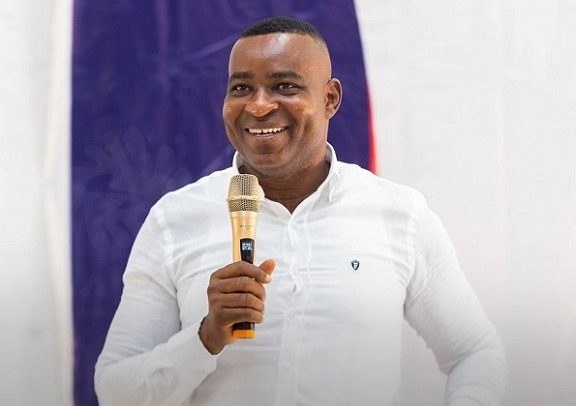
- Attorney General’s documents show no charge of illegal mining against Wontumi
- Case centers on indirect liability and regulatory breaches under the Minerals and Mining Act
- Witness testimony raises questions about Wontumi’s direct connection to mining activities
Wontumi Not Into Galamsey — AG Affirms in Court
Court Documents Shatter the Narrative. Akufo-Addo Vindicated.
For months, the machinery of government ground relentlessly against one man. The Attorney General’s office, the Ministry of Lands and Natural Resources, and a carefully coordinated media campaign all pointed the same finger at the same target — Bernard Antwi Boasiako, Chairman Wontumi, painted in the public imagination as the face of Ghana’s illegal mining crisis.
It was a powerful narrative.
It was also, as the courts are now revealing, a false one.
Details emerging from proceedings before the Accra High Court Criminal Division, Docket No. CR/0004/2026 tell a story strikingly different from the one this government sold to the Ghanaian public.
And the most damning revelation does not come from the defence.
It comes from the Attorney General’s own documents.
Nowhere in the charge sheet is Bernard Antwi Boasiako accused of engaging in galamsey.
The man who was publicly branded, televised, and pilloried as a galamsey kingpin has not been charged with illegal mining. Not once. Not anywhere in the prosecution’s own court documents.

What the AG Actually Said — In His Own Words
The prosecution’s Response to the Submission of No Case, signed by the Deputy Attorney General Dr. Justice Srem-Sai and filed on March 9, 2026, is a remarkable document not for what it proves, but for what it quietly concedes.
The charges before the court relate to two things only: transferring a mineral right without ministerial approval, and purposely facilitating an unlicensed mining operation both under the Minerals and Mining Act, 2006 (Act 703).
The AG’s own document confirms this. The prosecution is not in court to prove that Wontumi picked up a shovel, operated an excavator, or personally directed illegal mining on any concession.
Instead, the state’s case rests entirely on the argument that Wontumi, as a director and shareholder of Akonta Mining Company Limited (A3), bears indirect liability for activities carried out by third parties on the company’s concession.
Indirect. Facilitation. Without ministerial approval.
This is the sum total of the case against Ghana’s most publicly vilified mining suspect.
And yet the government’s appointees spent months telling Ghanaians something else entirely.
The Witnesses Tell a Different Story:
A closer look at the prosecution’s own witness testimonies makes the case even more uncomfortable for the state.
Prosecution Witness 1, Henry Okum, the man at the centre of the mining activities stated plainly that he had never met Chairman Wontumi in person.
Akufo-Addo Was Right. Posterity Has Spoken
There is a bitter irony running through this story that cannot go unremarked.
When former President Nana Addo Dankwa Akufo-Addo sought to clarify the nature of the allegations surrounding Wontumi drawing a distinction between what was being publicly alleged and what could actually be legally proven, he was met with a torrent of abuse, ridicule, and accusations of shielding a criminal.
The political establishment and sections of the media were merciless.
The court documents now prove he was right.
The very Attorney General that this administration appointed has, through its own filed documents, confirmed in a court of law that the charge against Wontumi is not galamsey. It is a technical regulatory offence involving ministerial approvals and the interpretation of corporate liability. The former President’s position, so loudly condemned at the time, has been quietly, completely vindicated.
Posterity, as it so often does, has corrected the record.
The Questions That Demand Answers:
The revelations from court proceedings open a floodgate of questions that this government must answer and answer publicly.
If Wontumi was never charged with galamsey, why was he portrayed as Ghana’s number one galamsey criminal in government communications, ministerial press conferences, and state-aligned media for months on end?
If the real person who conducted mining on the concession — Henry Okum, PW1 is now a prosecution witness and apparent ally of the AG’s office, what exactly is the deal?
The man who admitted to mining, who claimed ownership of seized gold, who operated excavators on the land, walks free and testifies for the state.
The man who owned the concession and never set foot at the mining site sits in the dock.
If the President himself has openly acknowledged that members of his own party and government are involved in galamsey an admission that was welcomed with applause by civil society organisations now firmly in the government’s camp why is the full weight of the state’s prosecutorial machinery focused exclusively on one opposition figure?
These are not rhetorical questions. They are the questions of a democracy that expects equal justice under law.
The Danger Beyond This Case
The Wontumi case is not just about one man. It is about a principle.
When the state uses the full apparatus of prosecution charge sheets, court appearances, media management, civil society coordination to create a public narrative that its own court documents cannot support, something far more dangerous than injustice has occurred.
Legitimacy has been weaponised.
The law has been turned into a political instrument. And the court of public opinion, deliberately poisoned before the court of law could speak, has done damage that no verdict can fully repair.
Justice, the maxim tells us, must not only be done, it must be seen to be done.
What is being seen in Courtroom 4 of the Accra High Court is justice straining under the weight of a narrative built not on evidence, but on political necessity.
Chairman Wontumi may yet face the full scrutiny of the law on the charges actually before the court.
That process must be allowed to run its course, fairly and transparently.
But the Ghanaian public deserves to know today, not after a verdict that what they were told and what the law actually says are two very different things.
The AG has said so himself. In his own documents. Filed in open court