President Mahama Announces Next Year’s Constitutional Amendments to Be Voted on During District Elections
Entrenched clauses to face a national referendum alongside local elections, with efforts to boost voter turnout and save costs
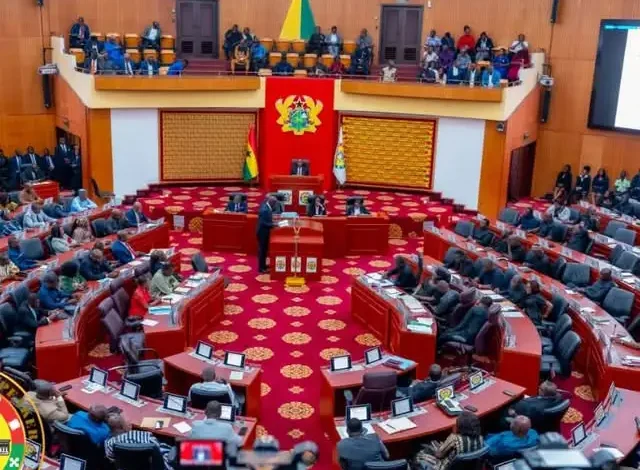
- A new Constitutional Review Implementation Committee will consolidate government and CRC recommendations
- Entrenched clauses require a referendum with at least 40% voter turnout and 75% approval
President John Mahama has announced plans to amend certain entrenched constitutional clauses, with votes scheduled during the upcoming District Assembly elections next year.
A new Constitutional Review Implementation Committee will be established to consolidate the government’s stance and the findings of the Constitutional Review Commission (CRC).

The proposed amendments will then be forwarded to Parliament for approval, with entrenched clauses—those requiring a national referendum—being put to a vote at the same time.
According to President Mahama, the committee’s primary task will be to reconcile the government’s position paper with the CRC’s recommendations. While non-entrenched clauses from the 1992 Constitution can be amended through parliamentary approval, changes to entrenched clauses demand a more rigorous process, including a national referendum.
“Entrenched clauses require a referendum where at least 40% of registered voters must participate, and 75% of those voting must approve,” President Mahama explained during his tour of the Upper East Region.

The President also revealed that the government plans to combine the constitutional referendum with the District Assembly elections next year to cut costs and boost voter engagement.
“We want voters to participate in both the District Assembly elections and the constitutional referendum simultaneously. If the referendum passes, we will proceed with implementing the amended entrenched clauses,” he added.
The CRC was established to gather public input and recommend constitutional amendments. The government later issued its own position paper in response. The distinction between “entrenched” and “non-entrenched” clauses aligns with the current Constitution, where entrenched provisions—such as those on fundamental human rights and governance structures—require a referendum for amendments, while non-entrenched provisions can be amended through parliamentary votes supported by at least two-thirds of MPs.