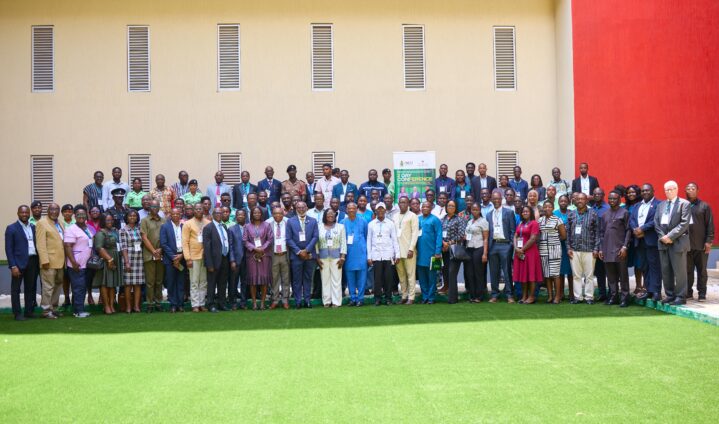
Kwame Nkrumah University of Science and Technology (KNUST) has inaugurated a new Injury Prevention and Research Centre at its College of Health Sciences, aimed at advancing research, shaping policy, and reducing injury-related cases across Ghana.
The centre is backed by funding from the Fogarty International Center under a broader initiative to strengthen injury control research in Ghana and the West African region.
Speaking at the launch, Provost of the College of Health Sciences, Professor Christian Agyare, noted that the centre builds on years of research and training under the KNUST Fogarty Injury Research Project. He emphasized that injuries are predictable and preventable, calling for stronger use of local data to inform national policies.
The launch coincided with a two-day conference that brought together researchers, policymakers, and practitioners to discuss practical strategies for addressing Ghana’s growing injury burden. The event focused on translating research findings into real-world interventions.
According to Professor Adam Gyedu, the centre evolved from earlier trauma research efforts that have trained dozens of scholars and produced over 100 academic publications. Despite these achievements, he noted that injury rates remain high, underscoring the need for coordinated action.
Medical expert Professor Peter Donkor called for stronger collaboration across disciplines, including healthcare, engineering, and emergency services, to develop sustainable solutions.
International partner Professor Charles Mock praised the quality of Ghana-based research, noting its relevance to global injury prevention efforts.
Delivering the keynote address, Dr George Kwadwo Owusu, CEO of the National Ambulance Service, stressed the importance of data-driven interventions. He highlighted improvements in emergency response capacity in Ghana but warned that gaps between research and implementation continue to cost lives.
Participants also examined key challenges such as trauma care systems, mass casualty response, injury surveillance, and the persistent “no-bed syndrome,” calling for stronger government investment and policy commitment.
With global targets set by the World Health Organization to reduce road traffic deaths by 50% by 2030, stakeholders cautioned that Ghana must intensify efforts in infrastructure, enforcement, public education, and research to meet these goals.