Ghana Moves to Join BRICS as Ablakwa Seeks India’s Support
Foreign Affairs Minister Samuel Okudzeto Ablakwa says BRICS membership will help diversify Ghana’s partnerships and expand economic cooperation with the Global South.
- Ghana to apply for BRICS membership
- India asked to support application
- Ghana-India cooperation set to expand
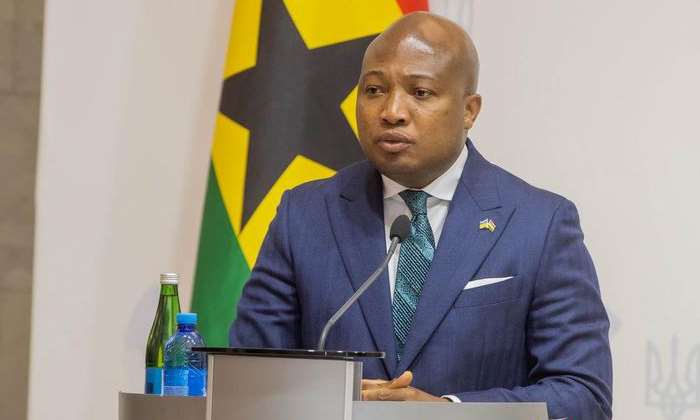
Foreign Affairs Minister Samuel Okudzeto Ablakwa has announced that Ghana will formally apply to join BRICS, the grouping of major emerging economies.
According to Mr Ablakwa, the decision forms part of the government’s efforts to diversify Ghana’s international partnerships, expand economic opportunities and strengthen cooperation with countries across the Global South.
He made the announcement during the official visit of India’s External Affairs Minister, Dr Subrahmanyam Jaishankar, to Ghana.
Mr Ablakwa said India’s membership of BRICS made the country an important strategic partner in Ghana’s bid to join the grouping. He added that the government had already approached India for assistance with the application process and was hopeful of receiving its support.
“The major highlight, which I am disclosing to the Ghanaian people for the first time, is that the Cabinet of President John Dramani Mahama has decided that Ghana will be joining BRICS.”

He said membership would provide Ghana with additional economic options, broaden its international partnerships and create opportunities for deeper South-South cooperation.
“We believe that joining India in BRICS will give us economic options, will diversify our base and our partnerships, and will also allow us to have more cooperation within the Global South framework.”
Ghana-India Cooperation
Mr Ablakwa also outlined plans to strengthen cooperation between Ghana and India in several sectors, including railway development, pharmaceuticals, information and communication technology, defence, agriculture, science and technology.
He said the two countries had signed two Memoranda of Understanding covering agriculture and science and technology as part of efforts to deepen their comprehensive partnership.
Dr Jaishankar said India and Ghana were exploring greater cooperation in areas including pharmaceuticals, healthcare, mining, defence, railways and digital technology.
He noted that both countries face similar development challenges and could benefit from sharing knowledge, expertise and experiences.
According to Dr Jaishankar, initiatives such as Ghana’s Accra Reset, Feed Ghana and One Million Coders programmes have similarities with development initiatives being implemented in India.
The two countries have also signed agreements covering agricultural research and training, as well as biodiversity.
Dr Jaishankar further welcomed Ghana’s role in the African Union and ECOWAS and called for stronger cooperation between Accra and New Delhi at the United Nations, including on reforms to the UN Security Council.