Gov’t: Only 5% of Ghanaians Can Afford Housing Without Support
Government cites high land and construction costs, limited mortgage access as key barriers to homeownership.
- 60% require state-facilitated housing support.
- 30% remain unable to access housing with subsidies.
- National Mortgage Scheme offers 8.4% financing.
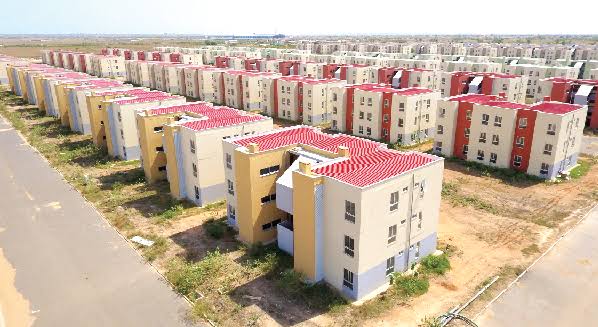
The government says only about 5 per cent of Ghanaians can afford to secure housing without assistance, while approximately 60 per cent require state-facilitated support to access decent housing.
The disclosure was contained in a joint statement issued by the Ministry of Works, Housing and Water Resources and the Ministry of Local Government, Chieftaincy and Religious Affairs to commemorate World Habitat Day 2026, observed under the theme “Adequate Housing for All.”

According to the two ministries, an additional 30 per cent of Ghanaians remain unable to access housing even with government subsidies, highlighting the scale of the country’s housing affordability challenge.
Rising Costs Deepen Housing Challenge
The ministries attributed the housing difficulties to several factors, including high land prices, rising construction and infrastructure costs, and limited access to affordable housing finance.
“These realities underscore the need for deliberate interventions to make housing more accessible and affordable to all,” the ministries stated.

They said the government was implementing a number of initiatives aimed at improving access to decent housing and expanding opportunities for homeownership.
National Mortgage Scheme
Among the measures is the National Mortgage Scheme, being implemented in partnership with the National Housing Fund and Republic Bank.
Under the scheme, eligible beneficiaries can access mortgage financing at an interest rate of approximately 8.4 per cent per annum, with repayment periods extending up to 20 years.
The ministries said the initiative was designed to provide more Ghanaians, particularly those who have traditionally been excluded from the formal mortgage market, with an opportunity to own decent homes.
Focus on Sustainable Urban Development
The government is also pursuing the National Urban Policy and Implementation Plan 2026–2035 and the National Slum Upgrading and Prevention Strategy and Implementation Plan 2026–2035 to address housing and urban development challenges.
The ministries stressed that adequate housing goes beyond the provision of physical housing units, noting that decent living conditions also require access to potable water, sanitation, roads, electricity, drainage and public spaces.
“Government remains committed to expanding access to decent, affordable and sustainable housing throughout the country,” the ministries said.
The statement formed part of Ghana’s observance of World Habitat Day, which highlights the need for inclusive and adequate housing and sustainable human settlements.