Zanetor Pushes for Clearer Rules to Accelerate Ghana’s Biotech Growth
Environment Minister says predictable regulation is key to attracting investment and promoting responsible biotechnology innovation.
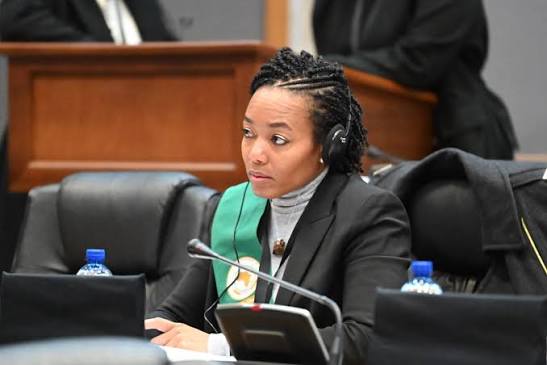
- Calls for predictable regulations
- Seeks stronger investor confidence
- Promotes responsible biotech innovation
The Minister for Environment, Science and Technology, Dr Zanetor Agyeman-Rawlings, has called for a clear, coordinated and predictable regulatory framework to promote investment, research and innovation in Ghana’s biotechnology sector.
According to the Minister, effective regulation is essential to ensuring that biotechnology developments are safe and responsibly managed. However, unclear procedures and uncertainty over the roles of regulatory institutions could discourage investment and hinder the sector’s growth.

Dr Agyeman-Rawlings made the call at the launch of the 2027 BBExpo, where she stressed the need for an enabling environment that would allow biotechnology researchers, entrepreneurs and investors to operate with greater certainty.
She said building a strong biotechnology ecosystem would require more than scientific expertise and financial investment, noting that regulatory institutions must also coordinate effectively to provide clear guidance to businesses and researchers.
The Minister explained that investors need clarity on the requirements they must meet, the institutions responsible for different stages of the regulatory process, the evidence and documentation required, and the expected timelines for decisions.

She noted that the absence of such clarity could result in unnecessary delays and increase the risks associated with investments in biotechnology ventures.
Dr Agyeman-Rawlings stressed that regulation should not be regarded solely as a barrier to innovation, but as an important tool for promoting responsible development.
“Regulation should not be viewed simply as a constraint on innovation. Good regulation enables responsible innovation. What discourages investment is not necessarily the existence of regulation but uncertainty.”
She further explained that investors could prepare for stringent regulatory requirements but would find it more difficult to plan around unclear or unpredictable processes.
“A serious investor can’t prepare for stringent requirements. It is much more difficult to prepare for unclear and unpredictable regulatory processes.”
The Minister said Ghana’s biosafety system must therefore provide researchers and businesses with clear requirements and predictable procedures to strengthen investor confidence.
She added that regulatory decisions should be transparent, evidence-based and consistently applied, while ensuring that potential risks to human health and the environment are properly assessed, communicated and managed.
Dr Agyeman-Rawlings said achieving this balance would help create greater public confidence while supporting the development of Ghana’s biotechnology industry.