Thousands Sleep on Beaches as Migrant Crisis Deepens in Spain’s Ceuta
Reception centres in the Spanish enclave are overwhelmed after thousands crossed the border from Morocco in an unprecedented migration surge
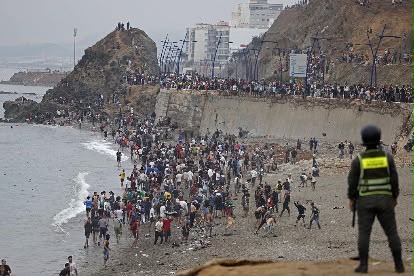
- Thousands stranded in Ceuta after mass border crossing
- Reception centres overwhelmed by migrant surge
- EU tensions rise over migration crisis
Thousands of migrants remain stranded in Spain’s North African enclave of Ceuta after an unprecedented border crossing last week overwhelmed reception facilities and forced hundreds to sleep on beaches.
Local authorities estimate that between 3,000 and 5,000 migrants are still in the territory, despite nearly 69,500 people being returned to neighbouring Morocco over the past four days.
The number of returns surpasses Spain’s earlier estimate that about 50,000 migrants crossed into Ceuta during the surge. At least 72 people reportedly died on the Spanish side of the border, while Moroccan authorities recorded 11 deaths.
Some migrants said they chose to return after businesses closed, leaving them without access to food, while others cited hostility from residents and uncertainty over reaching mainland Spain.
Footage showed dozens of migrants, mostly from sub-Saharan Africa, sleeping on the sand at El Trampolin beach, with some using towels for protection against strong winds as security patrols continued nearby.
Ceuta’s regional leader, Juan Jesús Vivas, said the enclave’s facilities for adults and minors had reached their limit.

“The centres have collapsed,” Vivas told Spanish broadcaster Telecinco, as he estimated thousands of migrants remained in the city.
Authorities are also processing hundreds of unaccompanied migrant children, who are protected under Spanish law and cannot be immediately deported.
Ceuta and Melilla, Spain’s two territories on Morocco’s Mediterranean coast, remain key entry points into the European Union and have repeatedly faced migration pressures.
Political tensions rise
The crisis has intensified debate across Europe, with anti-immigration groups gaining momentum and EU governments divided over responsibility for border control and migrant reception.
EU interior ministers are expected to hold an emergency meeting to discuss the situation.
Spain’s Foreign Minister José Manuel Albares called for solidarity from European partners, saying Madrid had supported other countries during previous migration crises.
Meanwhile, Ceuta’s leadership questioned Morocco’s role in the crisis, alleging that authorities may have allowed or facilitated the mass crossing.
Morocco has rejected the claims, saying the situation was driven by misinformation on social media, human trafficking networks and confusion over legal procedures.
Intelligence concerns
Reports from Spanish media suggest intelligence agencies believe Morocco did not directly organise the border surge but may have allowed it to happen by easing controls.
The reports have also raised questions over whether Spain’s intelligence services provided sufficient warning before the crossings occurred.
Spanish officials have defended the response of security forces, while saying intelligence operations remain classified.
The incident has renewed concerns over migration management, border security and diplomatic relations between Spain and Morocco.