Scientists Warn FIFA Over Heat Risks Ahead of 2026 World Cup
Experts say current safety measures are inadequate as extreme temperatures threaten player welfare at tournament venues.
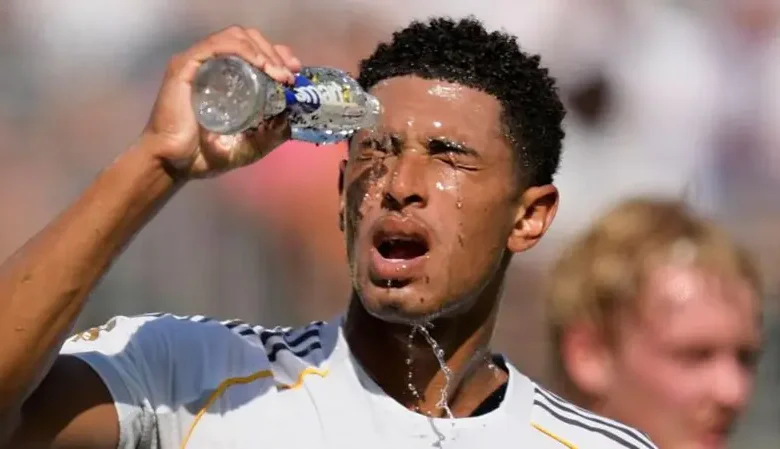
- Scientists say FIFA’s heat guidelines are “inadequate.”
- Up to 14 World Cup stadiums could face dangerous heat levels.
- Experts call for longer cooling breaks and match delays in extreme heat.
World football’s governing body, FIFA, is facing criticism from scientists who warn that its current heat safety measures for the 2026 men’s World Cup may be insufficient and could endanger players.
In an open letter, leading experts in health, climate science and sports performance said FIFA’s guidelines do not align with current scientific evidence and described them as “inadequate” and difficult to justify. They are urging stronger protections, including longer cooling breaks and clearer rules for delaying or postponing matches during extreme heat.

The concerns come ahead of the tournament, which will be hosted across the United States, Canada and Mexico, where researchers expect high temperatures in many of the host cities. At 14 of the 16 stadiums, conditions could reach levels considered dangerous for elite athletic performance.
In some regions, particularly parts of the southern United States and northern Mexico, daytime temperatures can range in the low to mid-30°C and may rise close to 40°C during heatwaves. When humidity and other environmental factors are added, the risk of heat stress for players increases significantly.


FIFA has defended its approach, stating that it prioritises the safety of players, officials and fans, and that climate risks are considered during tournament planning.
As part of its current welfare measures, FIFA has introduced mandatory three-minute cooling breaks in each half of matches, regardless of conditions, along with climate-controlled benches for substitutes and team staff.
The organisation also uses the Wet Bulb Globe Temperature (WBGT) index to assess heat stress, with a reading around 28°C considered a serious concern for elite athletes. If levels approach or exceed 32°C, match organisers are advised to consider additional precautions.
FIFA further says it has plans to support spectators in extreme heat, including allowing sealed water bottles into stadiums and providing shaded areas, misting systems, cooling buses and expanded water stations.
Despite these measures, scientists argue that the proposed safeguards do not go far enough to protect players from the increasing risks posed by extreme weather conditions expected during the tournament.