Vice President Launches Revised National Cultural Policy of Ghana to Boost Creative Economy
Revised National Cultural Policy sets framework for strengthening Ghana’s creative industries, preserving heritage, and driving economic transformation in line with SDGs and Agenda 2063.
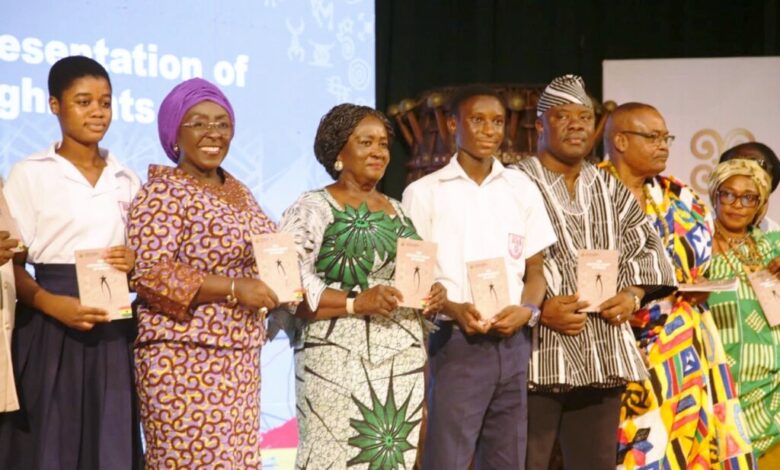
- Vice President launches revised National Cultural Policy at National Theatre
- Policy aims to boost creative industries and preserve Ghana’s cultural heritage
- Framework aligns with SDGs and AU Agenda 2063 for national development
Vice President Prof. Jane Naana Opoku-Agyemang has officially launched Ghana’s revised National Cultural Policy, aimed at preserving the country’s cultural heritage while strengthening the creative arts sector to drive economic growth and job creation.
The launch took place on June 8, 2026, at the National Theatre in Accra.
The policy serves as a strategic framework for the development of Ghana’s cultural and creative industries, positioning culture as a key driver of national transformation. It replaces the previous policy adopted in 2004 and aligns with the United Nations Sustainable Development Goals (SDGs) as well as the African Union’s Agenda 2063.
Speaking at the event, Prof. Opoku-Agyemang urged stakeholders in the Cultural and Creative Industries (CCIs) to work together to achieve the policy’s goals.
“Let this launch mark the start of a bold chapter in Ghana’s cultural journey. Let us come together—government, traditional authorities, the youth, and the diaspora—to unlock the full potential of culture and creativity. We must build a nation that draws strength from its heritage, creates opportunities through innovation, and projects its voice with confidence and influence on the world stage,” she said.
Minister for Tourism, Culture and Creative Arts, Abla Dzifa Gomashie, noted that the revised policy is the result of years of stakeholder consultations and will promote creative entrepreneurship, cultural investment, and the integration of culture into national development planning.

Work on the revised policy began seven years ago following extensive engagements with stakeholders across the cultural sector.
The policy outlines key areas including culture and heritage, culture and society, culture and governance, culture and the economy, culture and technology, as well as implementation and regulatory frameworks.
The government says the policy reinforces Ghana’s commitment to using culture as a tool for sustainable development, heritage preservation, economic empowerment, and global cultural engagement.