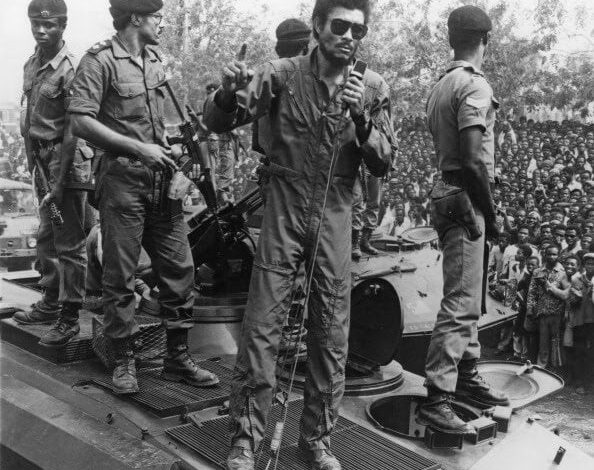
46 years ago, the June 4th Uprising of 1979 was a pivotal moment in Ghana’s history, marked by a popular revolt against corruption and mismanagement within the military government.
Background
By 1979, Ghana was facing severe economic challenges, including rampant inflation, scarcity of essential goods, and widespread corruption.
The Supreme Military Council II (SMC II), led by Lieutenant General Fred Akuffo, was seen as ineffective in addressing these issues. Junior military officers, led by Flight Lieutenant Jerry John Rawlings, were particularly disillusioned.
Rawlings had previously attempted a coup on May 15, 1979, which failed but highlighted the deep-seated frustrations within the armed forces
The Uprising
On June 4, 1979, Rawlings was freed from detention by fellow officers and taken to the national radio station, where he announced the formation of the Armed Forces Revolutionary Council (AFRC).
The AFRC aimed to restore discipline and accountability within the military and government. Major General Neville Odartey-Wellington, Chief of Army Staff, attempted to resist the uprising but was killed during a confrontation
The AFRC swiftly took control, arresting and executing senior military officers, including former heads of state, for alleged corruption and mismanagement. This period, known as the “house cleaning exercise,” was controversial but was seen by many as necessary to address the systemic issues plaguing the country
Aftermath and Legacy
The AFRC governed Ghana for three months, overseeing the transition to civilian rule and the subsequent elections that brought Dr. Hilla Limann to power. However, Rawlings returned to power in a second coup on December 31, 1981, establishing the Provisional National Defence Council (PNDC), which ruled until 1992.
The June 4th Uprising is remembered for its emphasis on probity, accountability, and social justice. While the methods were harsh, the uprising highlighted the need for systemic reforms and left a lasting impact on Ghana’s political landscape
Today, June 4th is commemorated as a significant day in Ghana’s history, reflecting on the struggles and sacrifices made to uphold the nation’s values and principles.