Mahama Denies Role in Asantehene Convoy Attack, Calls Viral Video Fake
Former president refutes claims, calls viral video a deliberate smear campaign by the ruling party
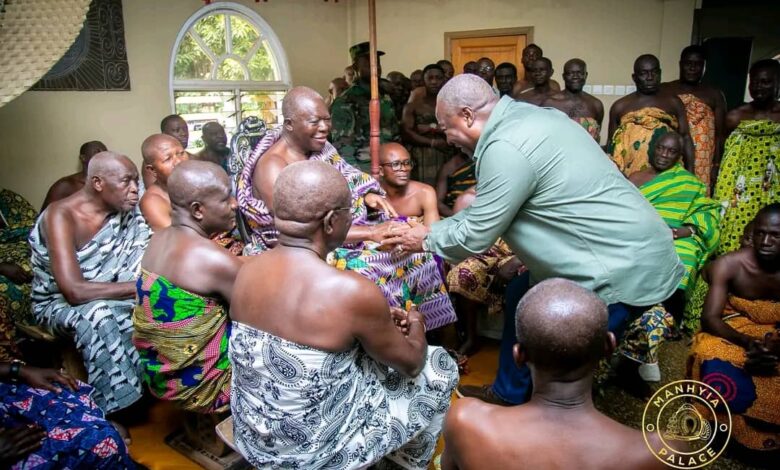
- Former President Mahama refutes claims of orchestrating the attack on Asantehene Otumfuo Osei Tutu II’s convoy in Techiman
- He labels the circulating video as AI-manipulated "fake news"
- Mahama accuses the Presidency of masterminding the smear campaign
Former President John Mahama has strongly refuted allegations of his involvement in an attack on the convoy of the Asantehene, Otumfuo Osei Tutu II, in Techiman.
The incident, which occurred on Monday, December 2, 2024, saw unidentified individuals allegedly throwing stones at Otumfuo’s motorcade as he returned from a funeral in Nkoranza, Bono East Region.
In a meeting with the Asantehene, Mahama dismissed a viral video implicating him in orchestrating the act, calling it “fake news” and attributing it to artificial intelligence (AI) manipulation. He described the video as a calculated smear campaign by the ruling New Patriotic Party (NPP) to tarnish his image and that of the National Democratic Congress (NDC).
He firmly denied claims that he mobilized youth in Techiman to attack the convoy and recalled how he had prayed for Otumfuo’s safety before the monarch’s journey.
Mahama accused the Jubilee House of masterminding the production and dissemination of the false video as part of a broader propaganda effort, blaming the ruling party’s struggles in the election season for the smear tactics.
“The NPP’s campaign has run out of energy, so they are resorting to lies. Nana, all these accusations are baseless,” he emphasized.