Juaben MP Demands Answers Over GoldBod’s GHS27.5m Geological Deal
Legal, Transparency Concerns Raised Over GoldBod–GGSA Deal and Release of 20 Mineralised Areas
- MP argues GoldBod may have exceeded its authority, as its core mandate does not include holding mineral concessions
- Concerns raised over the apparent absence of the Mines Ministry in the GGSA agreement
- MP demands clarity on the funding source
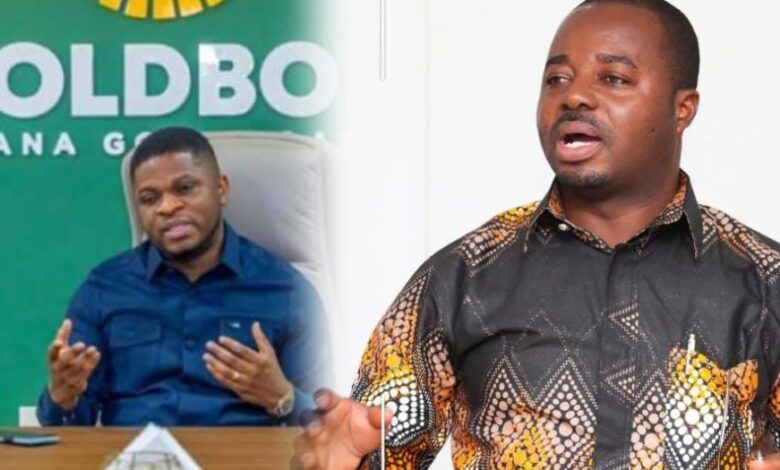
Juaben MP, Hon. Francis Owusu-Akyaw, has thrown GoldBod into the spotlight, demanding urgent answers over a GHS27.5 million geological investigation deal and the reported release of 20 mineralised areas to the state agency.
The controversy follows a public announcement by the GoldBod CEO that the agency had signed an agreement with the Ghana Geological Survey Authority (GGSA) to conduct geological investigations in Funsi, Atuna, and Bensere East over a four-month period.
However, according to the MP, the announcement raises serious legal and governance concerns under the Ghana Gold Board Act, 2025 (Act 1140), and the Minerals and Mining Act, 2006 (Act 703).
“GoldBod Was Created to Trade Gold, Not Hold Mineral Areas”
In a strongly worded public statement, Hon. Owusu-Akyaw argued that GoldBod was established by Parliament to buy, sell, assay, refine, and export gold—not to function as a mining company or a concession-holding body. He says the agency may have gone beyond its legal mandate.
Big Question: Where Is the Mines Minister?
One of the MP’s major concerns is whether the Ministry responsible for Mines was involved in the agreement at all.
He points to Section 3(1)(e) of Act 1140, which allows GoldBod to engage in geological investigations only in collaboration with the Mines Ministry.

However, he notes that the CEO’s public statement mentions only GoldBod and GGSA, with no visible role for the Minister or the Ministry. That, he argues, is a red flag.
“Model Mines” Not in the Law?
Another issue is GoldBod’s stated justification for the project.
According to Hon. Owusu-Akyaw, the law permits GoldBod to undertake geological investigations solely to support small-scale miners.
However, the CEO reportedly stated that the project is intended to generate data for the establishment of “model mines” in Ghana.
The MP insists that “model mines” do not appear anywhere in Act 1140 and is asking a direct question:
What legal authority allows GoldBod to spend GHS27.5 million on a programme Parliament has not explicitly approved?
20 Mineral Areas: By What Authority?
Perhaps the most explosive aspect of the MP’s statement is his challenge regarding the 20 mineralised areas reportedly released to GoldBod by the Minerals Commission.
He argues that under Act 703, only the Minister responsible for Mines has the legal authority to grant rights over mineral areas—not the Minerals Commission acting alone.
He also notes that GoldBod’s founding law does not authorise it to hold mineral concessions or blocked-out areas.
This raises a critical legal question:
Did GoldBod lawfully receive those 20 mineral areas, or is the arrangement legally flawed?
MP Demands Full Disclosure
Hon. Francis Owusu-Akyaw is now calling on the GoldBod CEO and the Minister for Mines to publicly clarify:
- Whether the Ministry for Mines approved or collaborated on the GGSA deal;
- The legal basis for releasing the 20 mineral areas to GoldBod;
- Whether GoldBod holds valid mineral rights over those areas; and
- The source of the GHS27.5 million funding.
“Ghanaians Deserve Answers”
The Juaben MP says he is not accusing anyone of bad faith but insists that the issues raised are too serious to be ignored.
With millions of cedis involved, a new “model mines” programme being publicly announced, and 20 mineral areas now under scrutiny, the matter is likely to attract wider public and parliamentary attention.
For Hon. Owusu-Akyaw, the core issue is simple: Ghana’s mineral resources must be managed lawfully, transparently, and in the national interest.