GHS Confirms No Cholera Outbreak After June Floods, Intensifies Prevention Efforts
Health authorities launch disinfection campaign in flood-affected communities and urge the public to maintain proper hygiene to prevent waterborne diseases.
- No cholera cases recorded after the floods.
- Disinfection underway in affected communities.
- GHS urges continued sanitation and hygiene.
The Ghana Health Service (GHS) has confirmed that no cholera outbreak has been recorded in the aftermath of the June 29 floods, while urging the public to maintain good sanitation and hygiene practices to help prevent waterborne diseases.
According to the GHS, although the flooding created conditions that could increase the risk of disease outbreaks, ongoing preventive measures have significantly reduced that threat. The Service stressed that preventing an outbreak is far more effective and less costly than responding to one after it occurs.
As part of its post-flood response, the GHS has launched a disinfection exercise in affected communities following the government’s nationwide clean-up campaign. The initiative is designed to eliminate harmful microorganisms in public areas and reduce the risk of cholera, typhoid, and other sanitation-related diseases.
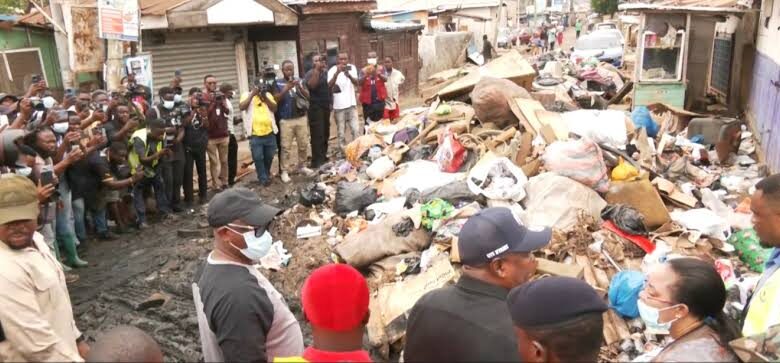
The intervention comes after severe flooding left many communities with accumulated refuse, blocked drainage systems, and stagnant water, raising concerns about potential public health risks. To address these challenges, a nationwide clean-up exercise was conducted on July 10 and 11, bringing together government agencies, Metropolitan, Municipal and District Assemblies (MMDAs), security services, businesses, and community members to clear waste and desilt drains.
Speaking during a disinfection exercise at Tema Station Market and the Adabraka Polyclinic on Saturday, July 11, the Director-General of the Ghana Health Service, Dr. Samuel Kaba Akoriyea, reassured the public that no cholera cases had been detected but emphasized the need for continued vigilance.

“Fortunately, we have not recorded any cholera outbreak so far,” he said. “However, prevention remains our best strategy. We should not wait for an outbreak before taking action because treating such diseases is far more expensive than preventing them.”
Dr. Akoriyea explained that the disinfection campaign, carried out in partnership with the Korle Klottey Municipal Assembly and sanitation firm LCB Worldwide, is part of a broader effort to safeguard public health after the floods.
“Once the clean-up is completed, the next critical step is disinfection and fumigation to help prevent outbreaks of cholera, typhoid, and other infectious diseases,” he added.