Anthony Forson Jr. Rejects Proposed Cap on Supreme Court Justices
Supreme Court nominee says court’s broad jurisdiction and workload make a fixed limit impractical
- Forson opposes 19-member cap.
- Cites Supreme Court’s heavy workload.
- Calls for no cap for now.
Supreme Court nominee Anthony Forson Jr. has opposed proposals to place a fixed limit on the number of justices at Ghana’s apex court, arguing that the court’s broad constitutional mandate and heavy workload make a cap impractical at this stage.
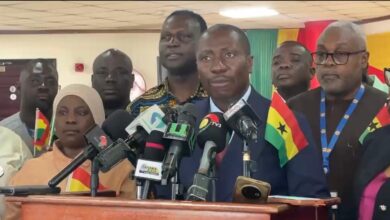
Appearing before Parliament’s Appointments Committee on Thursday, August 27, 2026, Mr Forson said limiting the number of Supreme Court justices to 19 could affect the efficient administration of justice unless the country first reviews and reduces the court’s extensive jurisdiction.

He said his position was informed by his professional experience and participation in discussions on judicial and constitutional reforms.
“I’m one of the advocates of no capping because of my experience and the kind of seminars that I have been to,” he said.
Mr Forson referred to an earlier constitutional review discussion in Parliament, where Justice Frimpong Manso reportedly raised concerns about limiting the number of Supreme Court justices because of the wide range of matters that fall within the court’s jurisdiction.

He explained that the Supreme Court’s extensive responsibilities make a fixed numerical limit potentially problematic.
“So, unless we as a country decide to reduce the jurisdictions which have been allocated to the Supreme Court, for now, there should be no cap,” he said.
His comments come amid ongoing discussions on constitutional reforms, including a government-backed proposal to cap the membership of the Supreme Court at 19 and introduce a fixed tenure for the Chief Justice.
Mr Forson also cited the court’s workload as a key reason previous governments had expanded its membership.
According to him, the justification for earlier increases in the number of Supreme Court justices was largely based on concerns that the existing composition was unable to cope with the volume of cases before the court.
“Indeed, if you look at the write-ups on the justification for the expansion of the membership of the Supreme Court, it was clear that the current composition was unable to cope with the workload,” he said.
He therefore maintained that, given the court’s current responsibilities, the country should not impose a cap for now.
“For now, I disagree that there should be a cap,” Mr Forson stated.