Israel and Lebanon Hold First Direct Talks in Over Three Decades
Historic US-mediated meeting signals cautious step toward easing decades-long conflict
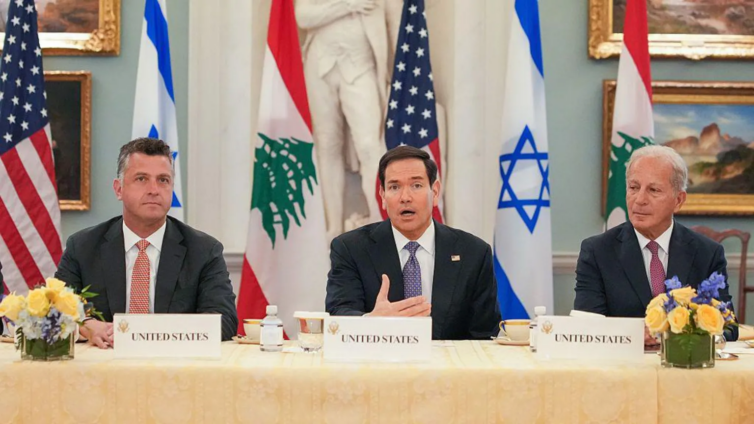
- Israel and Lebanon hold first direct talks since 1993 amid ongoing conflict.
- US mediates discussions aimed at reducing Hezbollah’s influence and restoring stability.
- Violence continues despite talks, with over 2,000 deaths and widespread displacement reported.
Israel and Lebanon have engaged in their first direct diplomatic talks since 1993, marking a significant step toward easing long-standing tensions and ongoing conflict in the region.
The rare meeting, held in Washington and mediated by Marco Rubio, focused on efforts to end hostilities linked to the Iran-backed militant group Hezbollah.
Rubio described the engagement as a “historic opportunity,” expressing hope that it could pave the way for reducing Hezbollah’s influence and restoring stability.
Key Outcomes of the Talks
According to a US statement, both sides agreed to initiate direct negotiations, with details on timing and venue to be determined.
Israel reiterated its objective of disarming all non-state armed groups, while Lebanon called for an immediate ceasefire and urgent measures to address its worsening humanitarian crisis.
The two countries do not maintain formal diplomatic relations, and their last high-level engagement occurred more than 30 years ago.

Conflict Continues Despite Talks
Even as discussions took place, violence persisted. Hezbollah reported carrying out multiple attacks on Israeli positions, while air raid sirens were triggered across northern Israel due to drone and rocket threats.
Israel maintains that its military operations in Lebanon are aimed at dismantling Hezbollah’s capabilities, following renewed hostilities that escalated earlier this year.
Since the latest conflict began in March, more than 2,000 people have reportedly been killed, with widespread displacement affecting nearly one million residents.
Diverging Positions
While the US backed Israel’s right to defend itself, Lebanon’s delegation emphasised the need for a ceasefire and humanitarian relief.
Lebanese President Joseph Aoun expressed hope that the talks would help end the suffering of citizens, particularly in southern Lebanon.
He stressed that long-term stability would depend on the Lebanese armed forces having sole responsibility for national security—a position complicated by Hezbollah’s strong influence within the country.
Hezbollah Rejects Outcome
A senior Hezbollah official indicated that the group would not be bound by any agreements reached during the talks, underscoring the challenges facing any diplomatic resolution.
Hezbollah, which holds significant military and political power in Lebanon, remains a central player in the conflict and a major obstacle to disarmament efforts.
A Fragile Path Forward
The talks come amid a broader regional crisis involving Iran and ongoing tensions across the Middle East.
While the meeting signals a potential diplomatic breakthrough, analysts caution that achieving lasting peace will require sustained negotiations and cooperation from all parties involved.
For now, the discussions represent a cautious but notable step toward de-escalation after decades without direct dialogue.