Ageing Water Infrastructure Driving Ongoing Shortages — GWL Chief
Decades-old treatment plants and stalled expansion blamed for Accra’s worsening water crisis.
- At least five major water treatment plants supplying Accra are over 60 years old and operating below capacity.
- No significant increase in water production has been recorded in recent years despite rapid population growth.
- Ageing pipelines, leakages and urban expansion continue to strain water distribution across the capital.
Managing Director of Ghana Water Limited, Adam Mutawakilu, has attributed recurring water shortages in Accra and surrounding communities to outdated treatment plants and years of limited infrastructure expansion.
Mr Mutawakilu explained that several of the country’s key water facilities were built more than six decades ago and are now struggling to meet growing demand.
He cited the Candy plant in Accra, constructed in 1950; the Kpong Old Works, built in 1954; and the Weija plant, completed in 1960, as examples of ageing infrastructure that still forms the backbone of the capital’s water supply system.
Although additional facilities were added over the years — including the Kpong New Works in 1965 and the Adomako Clarke plant at Weija in 1980 — expansion slowed significantly for long periods thereafter.
Further investments were made in 2014 and 2015 during the administration of former President John Dramani Mahama. These included the Tahal and desalination plants at Kpong, along with the Siemens and China Gezhouba projects. Mr Mutawakilu noted that four of the country’s ten major treatment plants were completed during that period.
Despite those additions, he said water production capacity in Accra and parts of the Greater Accra Region has not increased in recent years, even as population growth continues to drive up demand.

“Since then, not even a gallon of water has been added to production in Accra,” he stated, stressing that supply has remained static while consumption needs rise.
According to the GWL boss, at least five of the country’s major treatment plants are now classified as ageing and face significant technical constraints. Many operate below capacity due to obsolete equipment and deteriorating pipelines.
He noted that several distribution lines, some made from asbestos and metal decades ago, are weak, outdated and costly to maintain. Frequent leakages, pressure drops and mechanical breakdowns further disrupt supply, particularly in densely populated urban areas.
Rapid urbanisation across Greater Accra — including expanding communities around Accra and Weija — has compounded the situation, placing additional strain on existing systems.
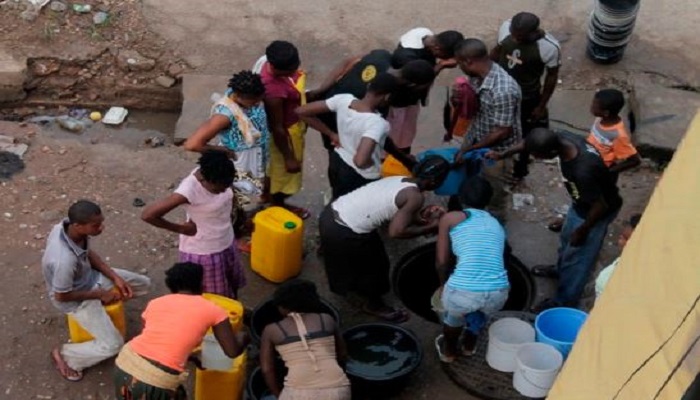
For years, residents in parts of the capital have reported irregular water flow, rationing and increased reliance on tanker services, especially during the dry season.
Mr Mutawakilu emphasised that without substantial investment in new treatment facilities and modern pipeline networks, water shortages are likely to persist. He called for sustained government support and long-term planning to upgrade ageing infrastructure and expand production capacity.
“Water is essential for life and development,” he said, urging authorities to align infrastructure development with population growth to prevent the crisis from worsening.