World Bank Invests $75M to Rehabilitate Ghana’s Cocoa Farms
Funding will help rehabilitate 25,000 hectares of cocoa farms, improve yields, and strengthen farmer incomes
- The World Bank has committed $75 million to rehabilitate 25,000 hectares of cocoa farms in Ghana
- The programme will introduce high-yield, disease-resistant cocoa varieties
- The initiative aims to strengthen farmer incomes, stabilize rural livelihoods
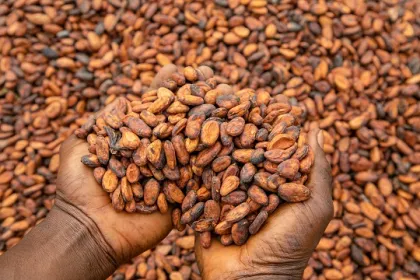
The World Bank has pledged around $75 million to a cocoa rehabilitation project aimed at restoring approximately 25,000 hectares of cocoa farms in Ghana, a sector currently struggling with disease outbreaks and declining productivity.
The funding, part of the World Bank’s West Africa Food Systems Resilience Programme (FSRP), seeks to improve farm yields, boost farmer incomes, and enhance the long-term sustainability of Ghana’s cocoa industry.
Speaking at a World Bank Civil Society Organisation event on food security in Accra, Agricultural Economist Dr. Ashwini Sebastian explained that the programme, implemented in partnership with the Ghanaian government, leverages additional grant financing, including seed funding from Norway, to support key agricultural value chains.
Dr. Sebastian noted that beyond cocoa, the programme is promoting seed system development in select clusters, introducing improved crop varieties that can withstand dry-season conditions, particularly in northern Ghana. Cashew seedlings are also being provided to diversify farmers’ income sources and strengthen livelihoods.
Focusing on cocoa, Dr. Sebastian described it as a flagship intervention: “We are putting in almost $75 million to rehabilitate 25,000 hectares of cocoa farms affected by disease, with an immediate target of restoring about 5,000 hectares by July.” The programme will replace diseased and unproductive trees with high-yield, disease-resistant varieties and encourage better farm management practices.
The investment comes at a critical time as Ghana’s cocoa sector faces challenges such as swollen shoot disease, aging trees, and climate variability. Analysts stress that large-scale rehabilitation is vital to reversing declining output and maintaining Ghana’s position as a top global cocoa producer.

With cocoa being a major source of foreign exchange, the programme is expected to support export revenues, rural economic stability, and overall agricultural resilience. The World Bank emphasises that strengthening strategic crops like cocoa is key to enhancing food security and building more resilient agricultural systems across West Africa.