(VIDEO) Ghana to Ban LPG Cylinder Imports, Boost Local Production – Energy Minister
Government plans to phase out LPG cylinder imports while expanding local production through GCMC revamp.
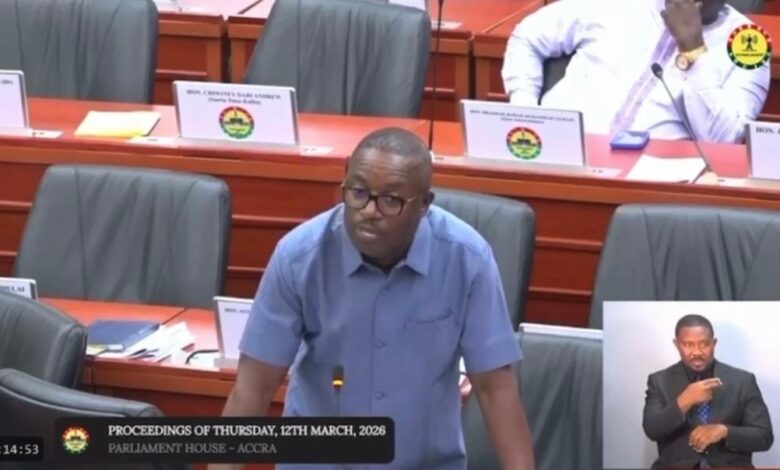
- John Abdulai Jinapor announces plan to ban LPG cylinder imports.
- Ghana Cylinder Manufacturing Company receives $6 million for revamp.
- Government partners with Ghana Commercial Bank and Ghana National Gas Company to boost production.
John Abdulai Jinapor, Minister for Energy and Member of Parliament for Yapei-Kusawgu, has announced government plans to ban the importation of LPG cylinders while prioritising local production through the revitalisation of the Ghana Cylinder Manufacturing Company (GCMC).
Speaking on the floor of the Parliament of Ghana, the minister revealed that the government is implementing measures to upgrade the state-owned company to increase domestic manufacturing capacity.
According to him, the company has already received $6 million out of the $8 million required for the revamp, and production has more than doubled this year compared to 2024.
Mr. Jinapor explained that the government’s strategy to strengthen GCMC includes introducing off-taker agreements, establishing an escrow account, and implementing a cylinder circulation model. The model will involve recalling old cylinders for refurbishment while partnering with GOIL as a key off-taker.
As part of the policy, the government intends to phase out the importation of LPG cylinders and prioritise locally manufactured ones.
The minister emphasised that strengthening GCMC will support Ghana’s clean energy agenda while also boosting the country’s local manufacturing sector.

To guide the process, a committee has been established to develop a comprehensive roadmap for cabinet consideration, while a Joint Project Implementation Committee will oversee the revitalisation programme.
The Ministry of Energy is also collaborating with Ghana Commercial Bank and Ghana National Gas Company to support the company’s full-scale operations.
The partnership is expected to strengthen local manufacturing, enhance energy security, and promote sustainable industrial growth in Ghana.
Mr. Jinapor added that Ghana’s energy sector is undergoing significant transformation, with more than 17 oil and gas projects expected to be developed by 2027 as part of broader reforms aimed at increasing energy output.
The country is also expanding its renewable energy initiatives, including plans to install solar-powered streetlights, deploy solar irrigation pumps for agriculture, and introduce solar-powered electric vehicle charging stations across the country.
From Prince Joe Boadi