Duncan-Williams Warns Prophets to Exercise Caution in Politics, Urges Scriptural Clarity
Archbishop emphasizes theological grounding and discernment in election-related prophecies
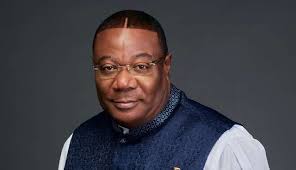
- Archbishop Duncan-Williams cautions prophets on making political predictions
- Emphasizes distinction between Old Testament and New Testament prophecy
- Warns that modern democratic contexts differ from biblical theocratic governance
Nicholas Duncan-Williams, Founder and General Overseer of Action Chapel International (ACI), has cautioned prophets to approach political matters with careful scriptural understanding amid rising controversies over election-related prophecies.
His remarks followed the public apology of Bernard Elbernard Nelson-Eshun, an Accra-based preacher, whose widely shared prediction that Kennedy Ohene Agyapong would win a recent internal party contest proved incorrect. The incident sparked renewed debate over the role of prophecy in modern democratic politics.
In an interview, Archbishop Duncan-Williams stressed the importance of distinguishing between Old Testament and New Testament prophecy. He explained that in the Old Testament, God’s Spirit came upon specific individuals temporarily, whereas in the New Testament, believers are guided by the indwelling Holy Spirit.
Quoting Revelation 19:10, he emphasized that “the spirit of prophecy is the testimony of Jesus,” underscoring that authentic prophecy ultimately points to Christ. He also cited Hebrews 1:1–2 to highlight that God spoke through prophets in the past but now communicates through His Son, Jesus Christ, and the promised Spirit of truth.
Archbishop Duncan-Williams noted that many controversies over political prophecies arise from limited biblical knowledge rather than a lack of secular education. He pointed out that prophets in ancient Israel addressed kings in a theocratic system, fundamentally different from modern democratic governance.
“Our countries and nations are secular. They are not the state of Israel,” he said, urging prophetic ministers to exercise discernment when engaging with contemporary political issues.

While affirming that God continues to speak today, Archbishop Duncan-Williams emphasized that prophecy, particularly in politically sensitive contexts, must be exercised with theological depth, wisdom, and responsibility.