Women Must Drive Policy and National Development – Prof. Opoku-Agyemang
Prof. Opoku-Agyemang urges women to actively shape policy and drive Ghana’s national development.
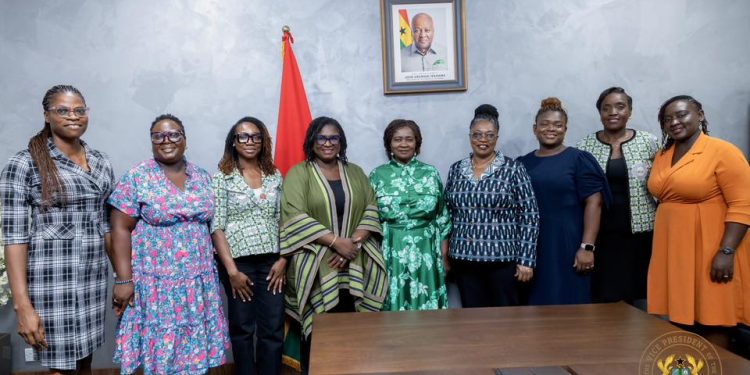
- Prof. Opoku-Agyemang urges women’s active participation in policy-making.
- She commends mentorship programs shaping future professionals.
- Emphasizes local-language teaching and critical thinking for development.
Vice President Professor Jane Naana Opoku-Agyemang has emphasized the vital role of women in national development, calling for increased inclusion, mentorship, and active participation in policy formulation.
The Vice President made the remarks during a meeting with members of Women in Engineering Ghana at her office on Monday, January 12, 2026. She described the group as an inspiring example of the indispensable contributions women make to Ghana’s development agenda.
Professor Opoku-Agyemang commended the association’s efforts and encouraged its members to reflect, strategize, and adopt innovative approaches to problem-solving. She highlighted that sustainable development requires fresh thinking and deliberate promotion of inclusivity.
She also praised the organization’s mentorship programs, noting their importance in guiding the next generation of professionals. According to her, early specialization in narrow academic fields can limit creativity and adaptability. She advocated for a strong liberal education foundation to equip young people with critical thinking skills essential for navigating a rapidly changing world.
Stressing the importance of women’s voices across all sectors, the Vice President urged women to actively participate in policy formulation and leadership. She cautioned against allowing fear to hinder engagement, emphasizing that women’s perspectives are crucial in shaping decisions that affect both their lives and the nation.
The discussion also touched on the role of language in education. Prof. Opoku-Agyemang noted that teaching in local languages improves comprehension by connecting learning to children’s immediate environments, strengthening understanding and confidence from an early age.

The meeting reaffirmed the government’s commitment to inclusive development and the empowerment of women as central drivers of Ghana’s progress.