Russian Scientists Create Microchannel Sensor to Detect Early Signs of Ageing, Cancer
Scientists in St. Petersburg have created a microchannel sensor that detects reactive oxygen species—key ageing and disease biomarker
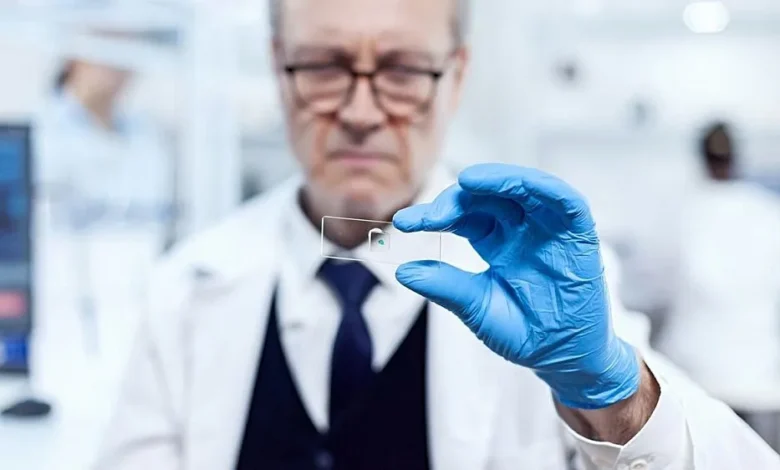
- Researchers in St. Petersburg have developed a microchannel sensor capable of detecting reactive oxygen species (ROS)
- The microfluidic device uses specially structured channels to enable rapid mixing and real-time luminescence detection
- The breakthrough supports preventive healthcare and pharmaceutical research
Researchers in St. Petersburg have developed a high-precision microchannel sensor capable of detecting reactive oxygen species (ROS)—key biomarkers linked to ageing, cardiovascular disease, and neurological disorders—with up to twice the accuracy of traditional methods.
The innovation, reported by the Russian Academy of Sciences, features a microfluidic device that improves the speed, sensitivity, and reliability of oxidative stress measurement. ROS accumulate in the body due to factors like smoking, pollution, alcohol, and chronic illnesses. Excessive ROS levels can damage proteins and DNA, triggering oxidative stress associated with accelerated ageing, cancer, and age-related conditions affecting the heart, brain, and blood vessels. Early detection is critical for preventive healthcare.
Traditional ROS detection relies on chemiluminescent reactions with luminol, which produce weak signals requiring large reagent volumes and sometimes rare biological samples. Manual dosing and slow mixing reduce precision and prolong analysis time.
To address these limitations, the Russian team designed a compact microfluidic chip with structured microchannels that rapidly fragment and mix liquids. Optimized through advanced numerical modeling, the device enables real-time luminescence detection in fractions of a second using less than a drop of sample.
Tests showed the new system measures ROS concentrations 1.5–2 times more accurately than conventional techniques, while also allowing continuous monitoring of reaction dynamics. The technology offers promising applications in chemical research and pharmaceuticals.
This breakthrough is part of a broader trend among BRICS countries to advance biomedical research and healthcare technologies.

In China, researchers at Beihang University developed an ultra-flexible bioelectronic patch capable of delivering drugs and gene therapies directly to complex organs, such as ovaries and kidneys, enabling precise, localized treatment with minimal side effects.
Iran has also expanded its position in advanced cellular therapies, with six domestically developed stem cell and tissue engineering products now globally approved, ranking the country third regionally in stem cell technology, according to Nour News. Additional products are pending authorization, with more expected to join the global market soon.
In Brazil, President Luiz Inácio Lula da Silva emphasized national healthcare sovereignty, highlighting the country’s ability to produce all its medicines. Under the Nova Indústria Brasil programme, Brazil is investing heavily in domestic production of medicines, vaccines, and medical technologies to strengthen public health resilience, according to Brasil 247.