Ghana to Declare 21 Coastal Communities as Marine Protected Areas, Starting with Cape Three Points
Ghana begins implementing the ‘30×30’ target with Cape Three Points as first Marine Protected Area.
- Ghana will designate 21 coastal communities as Marine Protected Areas
- The initiative aligns with the ‘30×30’ global goal to protect at least 30% of the world’s land and oceans by 2030
- The “Save Our Sea” (SOS) campaign trained journalists on marine issues
Ghana is preparing to designate 21 coastal communities as Marine Protected Areas (MPAs) in a strategic move to safeguard marine biodiversity and strengthen fisheries management.
The initiative will begin with the Greater Cape Three Points in the Western Region, where the President is expected to officially declare the area an MPA, restricting fishing activities within the designated zone.
This effort aligns with Ghana’s commitment to the global ‘30×30’ target, which aims to protect and restore at least 30% of the world’s land and ocean areas by 2030. More than 190 countries have pledged under the Global Biodiversity Framework to conserve and manage critical ecosystems, including oceans, to preserve biodiversity and ecosystem services.
However, international progress remains slow. Since 2022, only about 2.9% of the world’s oceans are fully or highly protected, far below the 30% target. Ghana, like many nations, has made limited progress toward achieving this goal.
The Marine Protected Area initiative is part of the country’s plan to conserve coastal regions while supporting fisheries sustainability.
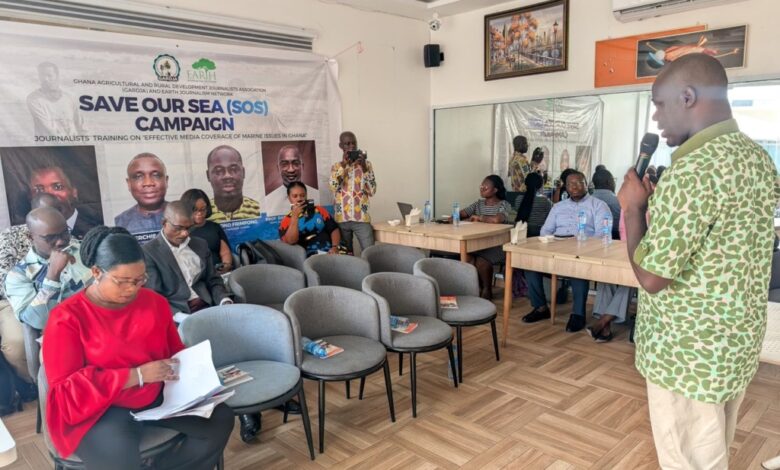
Professor Kwadwo Berchie Asiedu, Acting Executive Director of the Fisheries Commission, spoke during the launch of the “Save Our Sea” (SOS) campaign, organized by the Ghana Agricultural and Rural Development Journalists Association (GARDJA) in partnership with the Earth Journalism Network.

The SOS campaign included training on “Effective Media Coverage of Marine Issues in Ghana”, equipping journalists with knowledge about the global 30×30 target and how to report on complex marine issues such as fisheries laws, illegal transshipment, bottom trawling, and ocean conservation.
Prof. Berchie Asiedu highlighted the benefits of the MPA initiative, noting it will allow fish stocks to recover, promote spawning, and increase the catch per unit effort for local fishing communities.
“We are starting this process with the first Marine Protected Area. The declaration will happen this year, possibly this month, at Greater Cape Three Points,” he said. “The MPA allows fish to lay eggs and rest, ultimately improving the yield for our communities.”
Charles Smith, Country Coordinator for the Earth Journalism Network, emphasized the project’s role in empowering journalists through training and grants, enabling them to effectively report on marine conservation efforts in Ghana, Mexico, and the Philippines.
National President of GARDJA, Richmond Frimpong, encouraged journalists to use the skills gained from the training to produce comprehensive reports on marine issues, contributing to Ghana’s sustainable development goals.
The event brought together journalists, policymakers, and stakeholders dedicated to promoting marine conservation and sustainable fisheries management in Ghana.