AIDS Commission Inaugurates Regional Committee to Strengthen HIV Response
Nine-member committee inaugurated to coordinate and strengthen the decentralised HIV and AIDS response in Greater Accra.
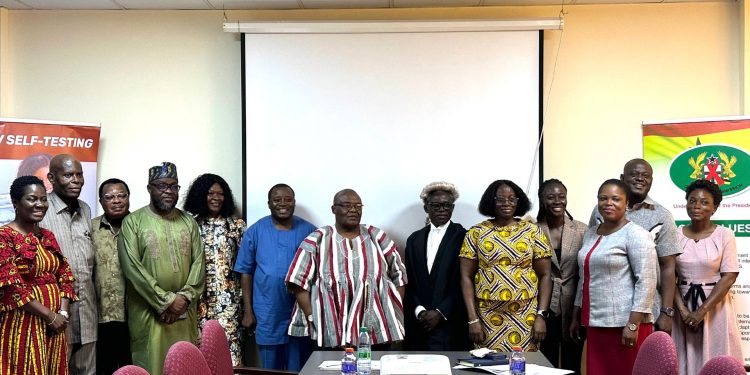
- GAC inaugurates Regional HIV Committee in Greater Accra.
- Focus on achieving 95-95-95 targets by 2030.
- Stakeholders commit to coordinated HIV response.
The Greater Accra Regional Office of the Ghana AIDS Commission (GAC) has inaugurated a nine-member Regional Committee to oversee and coordinate the decentralised HIV and AIDS response in the region.
The inauguration was in accordance with Section Nine of the Ghana AIDS Commission Act, 2016 (Act 938), which mandates the establishment of Regional Committees to support the implementation of the Commission’s functions at the sub-national level.
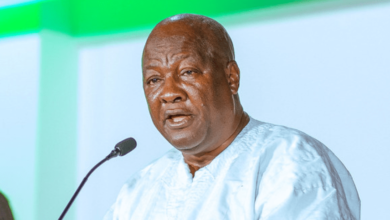
Speaking on behalf of President John Dramani Mahama, the Chairperson of the GAC Governing Board, Mr Kakra Essamuah, said members of the Committee would perform the functions of the Commission in the region as directed in writing by the Governing Board.
He explained that the Committee would regulate its own procedures and ensure effective coordination of HIV interventions across the region.
Mr Essamuah expressed confidence that with commitment and sustained effort, the Greater Accra Region could make significant progress towards achieving the national HIV targets, particularly the 95-95-95 fast-track goals by 2030.
He noted that the targets aim to ensure that 95 per cent of people living with HIV know their status, 95 per cent of those diagnosed are on sustained antiretroviral therapy, and 95 per cent of those on treatment achieve viral suppression.

Achieving these targets, he said, was crucial to ending AIDS as a public health threat by 2030, in line with the United Nations Sustainable Development Goals.
The Greater Accra Regional Minister, Madam Linda Obenewaa Akweley Ocloo, described the region as a critical front in Ghana’s HIV response due to its high population density and mobility.
She urged Metropolitan, Municipal, and District Assemblies to integrate HIV interventions into their development plans to accelerate progress towards epidemic control.
The Acting Director of the GAC, Dr Kharmacelle Prosper Akanbong, disclosed that the government was working to operationalise the National HIV and AIDS Fund to ensure sustainable domestic financing amid declining donor support.
“This is the only way we can sustain and advance our national response,” he said, encouraging the public to support the Fund by dialling *9898# and following the prompts.
Presenting the 2024 National and Sub-National HIV Estimates, the Technical Coordinator of the Greater Accra Technical Support Unit, Madam Rita Afriyie, said the region continued to record a significant HIV burden, with notable variations across districts.
She explained that disparities in adult HIV prevalence highlighted the need for targeted, district-specific interventions.
Madam Afriyie noted that recent data showed a gradual decline in HIV prevalence, new infections, and AIDS-related deaths, largely due to increased uptake of antiretroviral therapy services.
However, she stressed the need for sustained efforts, including intensified public education, expanded testing services, and improved access to treatment, to consolidate the gains and achieve epidemic control.
She called for continuous advocacy on the 95-95-95 targets and urged collaboration among government institutions, civil society organisations, traditional authorities, faith-based groups, and the private sector.
Following the inauguration, a Greater Accra Regional HIV Stakeholders’ Forum was held to engage key actors, align strategies, and strengthen collaboration to improve HIV prevention, treatment, and care outcomes in the region.
The forum ended with a commitment from stakeholders to work together towards eliminating HIV and AIDS in the Greater Accra Region.