Africans Welcome Lenacapavir as a Potential HIV Game-Changer
Biannual Injection Offers Near-Total HIV Protection for South Africans
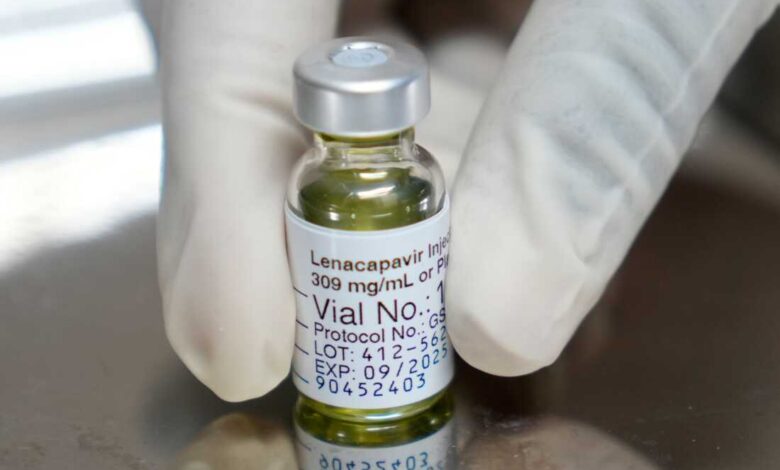
- Lenacapavir, a twice-yearly injection, offers near-total HIV protection
- A national trial led by Wits University will monitor 2,000 participants for a year
- Generics are expected to make the treatment widely affordable
Kegoratile Aphane remained calm as she received lenacapavir, a yellow drug hailed as a potential breakthrough in the fight against HIV.
The 32-year-old became one of the first South Africans—and among the first Africans—to receive the biannual injection, which offers near-total protection against HIV.
“I didn’t even feel any pain,” Aphane said, smiling after receiving the two injections that make up the initial dose. On Tuesday, five other patients were administered lenacapavir at a Pretoria clinic as part of a Wits University study funded by Unitaid.
The trial aims to enroll 2,000 participants, monitoring them over a year to assess real-world effectiveness, said Saiqa Mullick. South Africa, where nearly one in five adults lives with HIV, reported 170,000 new infections last year—the highest in the world.
Until now, HIV prevention depended on a daily pill, which many young people and marginalized groups struggled to take consistently. “This twice-yearly injection will be life-changing,” said clinic manager Magdaline Ngwato, highlighting its discreet use for LGBTQ patients and sex workers.
Interest in the treatment is growing, with mothers encouraging their children to participate, Ngwato added. For Aphane, the decision was personal: she lost her HIV-positive mother in 2021 and wanted protection for herself.

Twenty-year-old student Katlego, who spoke under a pseudonym, said early access provided an essential safeguard against unforeseen infections. A national rollout is expected next year, beginning with 400,000 doses through an agreement between Gilead Sciences and the Global Fund.
While lenacapavir costs $28,000 annually in the U.S., generics are projected at $40 per year from 2027 in over 100 countries. Aphane hopes the treatment will pave the way for an HIV-free future for her daughters and future generations, saving countless lives.