Africa Must Treat Sports as Strategic Economic Sector — Kofi Adams
Minister Highlights Investment, Policy Reforms, and Regional Cooperation as Keys to Unlocking Continent’s Sports Potential
- Adams urges Africa to treat sports as a key economic sector.
- Africa’s sports economy lags globally despite vast potential.
- Ghana’s reforms showcase sports driving national development.
Kofi Adams, Ghana’s Minister for Sports and Recreation, has urged African governments to reposition sports as a strategic economic sector capable of driving growth, job creation, and regional integration.
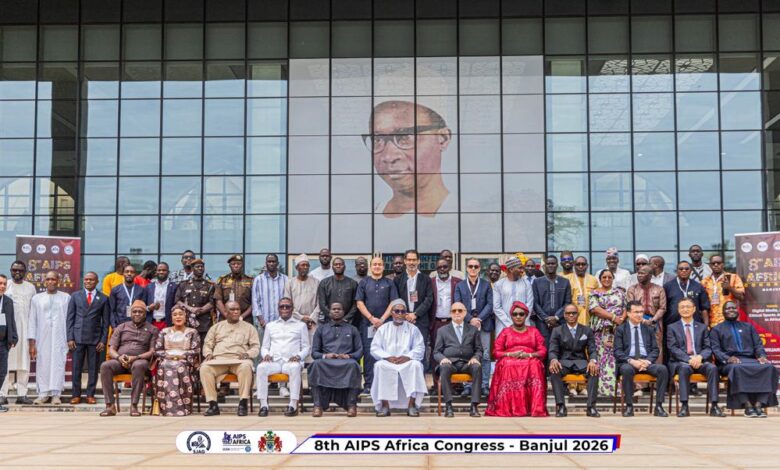
Delivering the keynote address at the opening ceremony of the AIPS Africa Conference in Banjul, Adams emphasized the need for deliberate policies and investment to unlock the continent’s vast sports potential.
He commended The Gambia for its hospitality and political commitment to sports development, youth empowerment, and media engagement, noting that such support reflects a growing recognition across Africa of sport as a tool for development.
“Across Africa, we recognise sport’s ability to unite communities, inspire youth, and bolster national identity. Yet, despite this shared understanding, sport remains undervalued as a strategic economic sector,” Adams said.
The Sports Minister highlighted the disparity between global and African sports economies, noting that the global sports industry was valued at over $512 billion in 2023 and is projected to reach $624 billion by 2027. In contrast, Africa’s sports economy is estimated at just $12–15 billion—less than 0.5% of the continent’s GDP—despite representing nearly 17% of the world’s population.
Adams lamented that African countries continue to export talented athletes cheaply while importing foreign sports content, stressing that the continent has the capacity to create and retain value locally.

He identified structural challenges limiting growth, including poor infrastructure, weak commercialisation frameworks, governance deficits, and restrictions on intra-African mobility for athletes and fans.
“Without proper organisation and regional cooperation, our potential remains untapped,” he warned.
Despite these challenges, Adams highlighted positive examples from Morocco, Rwanda, and Tanzania, where targeted investments and clear policies have positioned sports as both an economic and diplomatic asset.
Focusing on Ghana, Adams outlined reforms aimed at repositioning sports as a catalyst for national development. These include:
-
Returning the Ghana Premier League to free-to-air television
-
Increasing prize money for athletes
-
Establishing the Ghana Sports Fund to support infrastructure, grassroots programs, and athlete welfare
He noted that these reforms have already delivered results, with Ghana hosting 12 international sporting events in 2025, strengthening its reputation as a reliable multi-sport destination ahead of upcoming continental championships.
Adams also called on African sports journalists to uphold professionalism, stressing that credible reporting is critical to building trust, transparency, and investor confidence in the sector.
“Sport is no longer just about entertainment; it’s about jobs, content, tourism, identity, and power,” he said.
“The question is whether Africa is prepared to remove barriers, enforce frameworks, and treat sport as a production and export industry. The opportunity is ours; the responsibility is ours.”
The AIPS Africa Conference brings together sports administrators, policymakers, and media practitioners to explore strategies for harnessing sports’ full economic potential to support long-term development across the continent.