Manhunt Underway for Benin Coup Plotters as Freed Hostages Reemerge
Security forces pursue fugitive soldiers after failed coup as hostages are freed
- Security forces hunt soldiers behind failed coup as hostages are freed
- President Talon declares situation under control; Nigeria assists with airstrikes
- Mutiny leaders, including Lt. Col. Pascal Tigri, remain at large
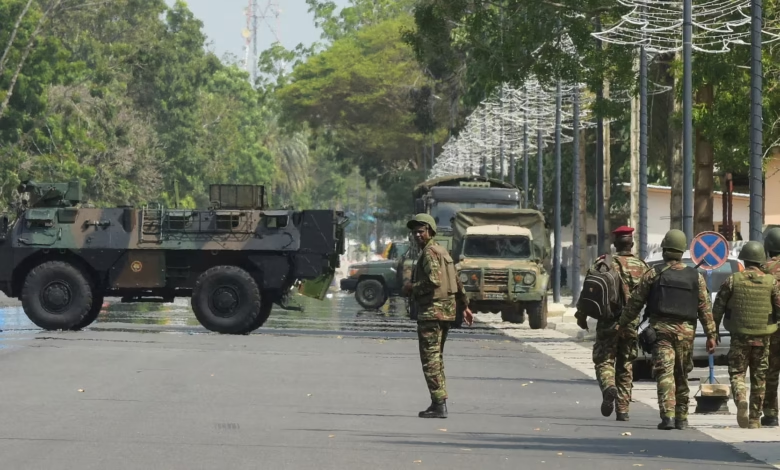
Security forces in Benin are actively pursuing soldiers responsible for Sunday’s failed coup, following the reported release of two senior officers who had been taken hostage during the mutiny, a government source told the BBC. It remains unclear how the officers were freed or whether additional hostages are still being held.
The coup attempt erupted in the early hours of Sunday, when a group of soldiers appeared on national television, announcing the suspension of the constitution and claiming control of the country. Gunfire was reported near the presidential residence in Cotonou.
President Patrice Talon later declared the situation “totally under control,” commending loyalist troops for eliminating the “last pockets of resistance.” In a televised address, Talon condemned the attempted takeover as “treachery” that would not go unpunished and urged citizens to return to normal life.
Nigeria assisted in suppressing the mutiny by deploying fighter jets at Benin’s request. The aircraft reportedly helped dislodge coup plotters from the national broadcaster and a military camp. Large explosions were later heard in Cotonou, believed to result from airstrikes, with flight-tracking data showing three jets entering Beninese airspace before returning.
Casualties have not been officially confirmed. Talon expressed condolences to victims of the failed coup and anyone still held by fleeing rebels.
Government spokesperson Wilfried Leandre Houngbedji stated that 14 individuals had been arrested. Journalists reported that 12 of the detainees were involved in storming the national TV station, including a dismissed soldier. The mutiny was reportedly led by Lt. Col. Pascal Tigri, who remains at large.

The rebels justified their actions by accusing Talon of mismanaging the country and failing to address growing insecurity in northern Benin, where jihadist militants linked to IS and al-Qaeda have advanced south from Niger and Burkina Faso. They also cited cuts to public health services, tax hikes, and restrictions on political activity.
Benin, long considered one of West Africa’s more stable democracies, has faced a recent surge in militant attacks along its northern border. President Talon, nicknamed the “king of cotton,” is expected to step down next year after two terms, with elections scheduled for April. He has endorsed Finance Minister Romuald Wadagni as his preferred successor.
While Talon is credited with economic reforms, critics accuse his government of suppressing dissent. Recent moves, including barring the main opposition candidate and approving constitutional amendments extending terms for elected officials, have intensified political tensions.
The attempted coup in Benin follows a wave of military takeovers in West Africa, including in Burkina Faso, Guinea, Mali, Niger, and Guinea-Bissau, with some pro-Russian online accounts praising the Benin mutiny.