Minority Demands Immediate Reversal of Utility Tariff Hikes
Minority urges government to address inefficiencies instead of burdening consumers
- Minority slams government over cumulative 28% electricity and water tariff hikes
- MPs urge fixing systemic power sector inefficiencies instead of burdening consumers
- Rising tariffs threaten households, SMEs, and risk pushing families into ‘utility poverty’
The Minority in Parliament has fiercely criticised the government over the latest utility tariff adjustments, demanding an immediate rollback of what they describe as excessive, unjustified, and economically damaging increases.
Their reaction follows the recent directive by the Public Utilities Regulatory Commission (PURC), which approved a 9.86% upward review in electricity tariffs and a 15.92% increase in water charges, effective January 1, 2026, as part of its multi-year tariff framework spanning 2026 to 2030.
According to the PURC, the upward adjustments are necessary to support critical investments, address inflationary pressures, and cushion utilities against exchange rate fluctuations in order to maintain efficient service delivery.
However, the Minority insists government should tackle long-standing inefficiencies in the power sector instead of shifting the burden onto already struggling consumers. They argue that plugging the millions of dollars lost annually through technical and commercial losses would significantly reduce the need for tariff hikes.
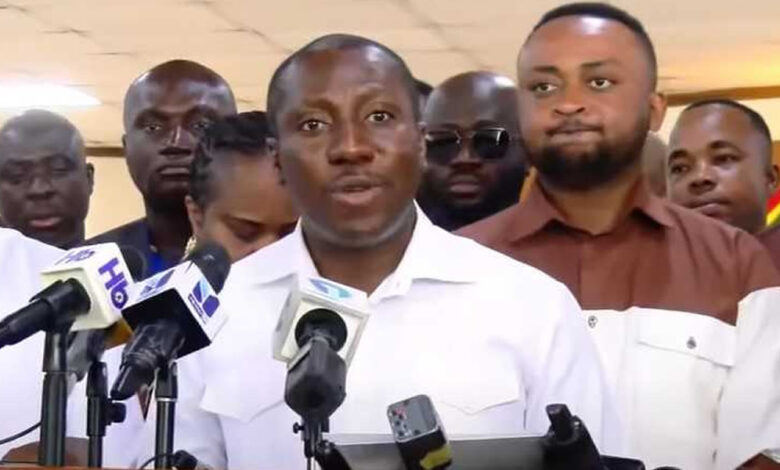
Addressing the press in Accra on Monday, December 8, Ranking Member on the Energy Committee and MP for Asene Manso Akroso, George Kwame Aboagye, described the cumulative 28.14 percent jump in electricity costs as intolerable, especially at a time when Ghana continues to record a staggering 32% power loss.
He accused the government of choosing “the lazy path” by passing its failures onto Ghanaians, warning that the increases would wipe out the recently approved 9% wage adjustment for 2026 and push many households into “utility poverty,” where families cannot afford basic electricity.

Aboagye cautioned that small and medium enterprises—the engine of Ghana’s economy—risk collapse under escalating operational costs. He stressed that the adjustments are “not reforms but punishments,” adding that they reflect failed leadership and misguided policies.
He questioned why systemic power losses persist despite stable demand patterns, citing Ghana’s peak demand of 4,080MW and average demand of 3,500MW. With 30% of power lost through inefficiencies—12% technical and 20% commercial—he noted that the country is losing up to $90 million annually.
“Tell me, can’t these savings be used to address our energy sector debts? Every year we talk about losses, yet no one seems serious about fixing them. A tariff review can go up or down—so why must it always go up?” he quizzed.
The Minority, he emphasised, stands firmly with households, workers, and businesses feeling the pressure and will continue to push for an immediate reversal of the tariff hikes.